Introduction: A World at War
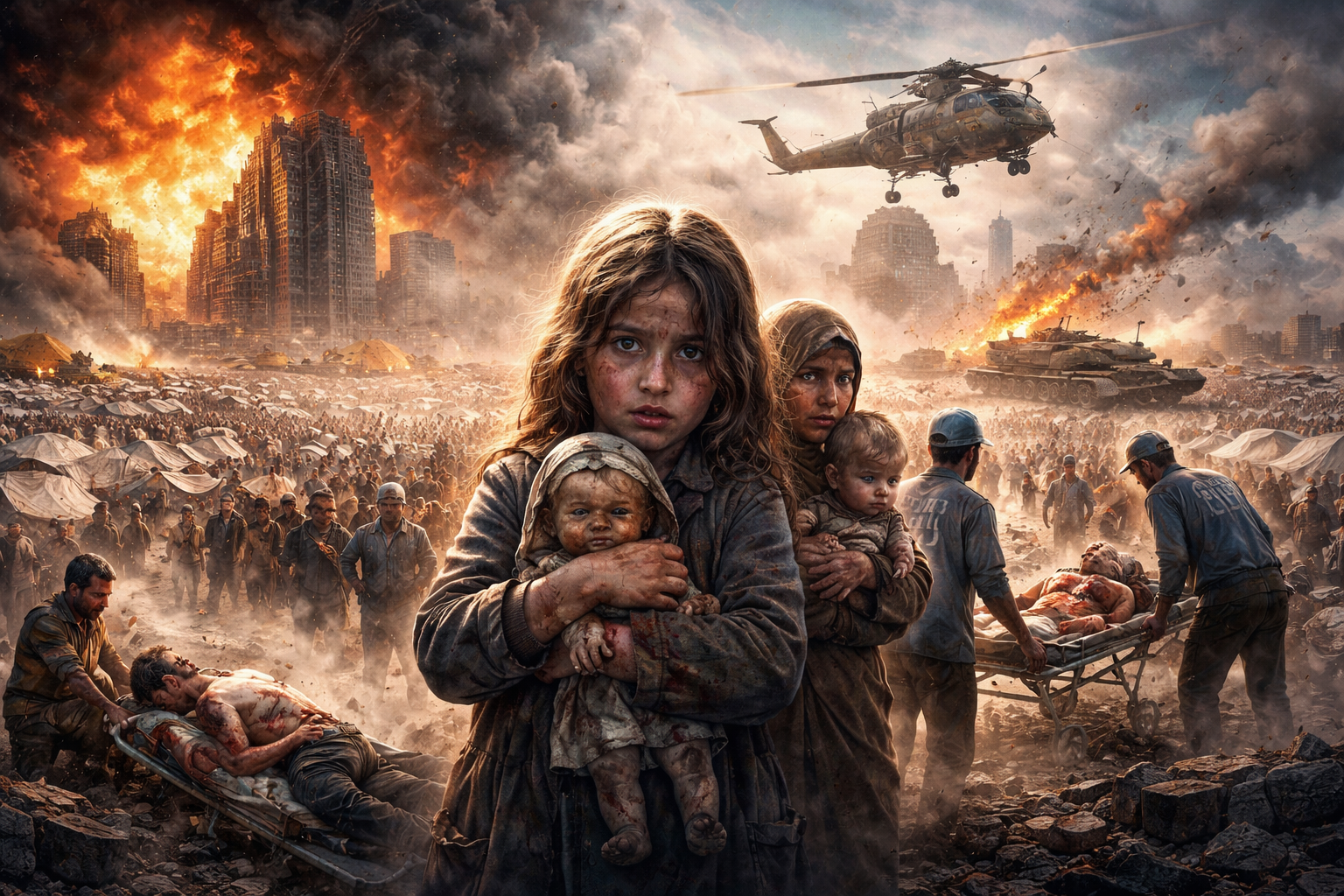
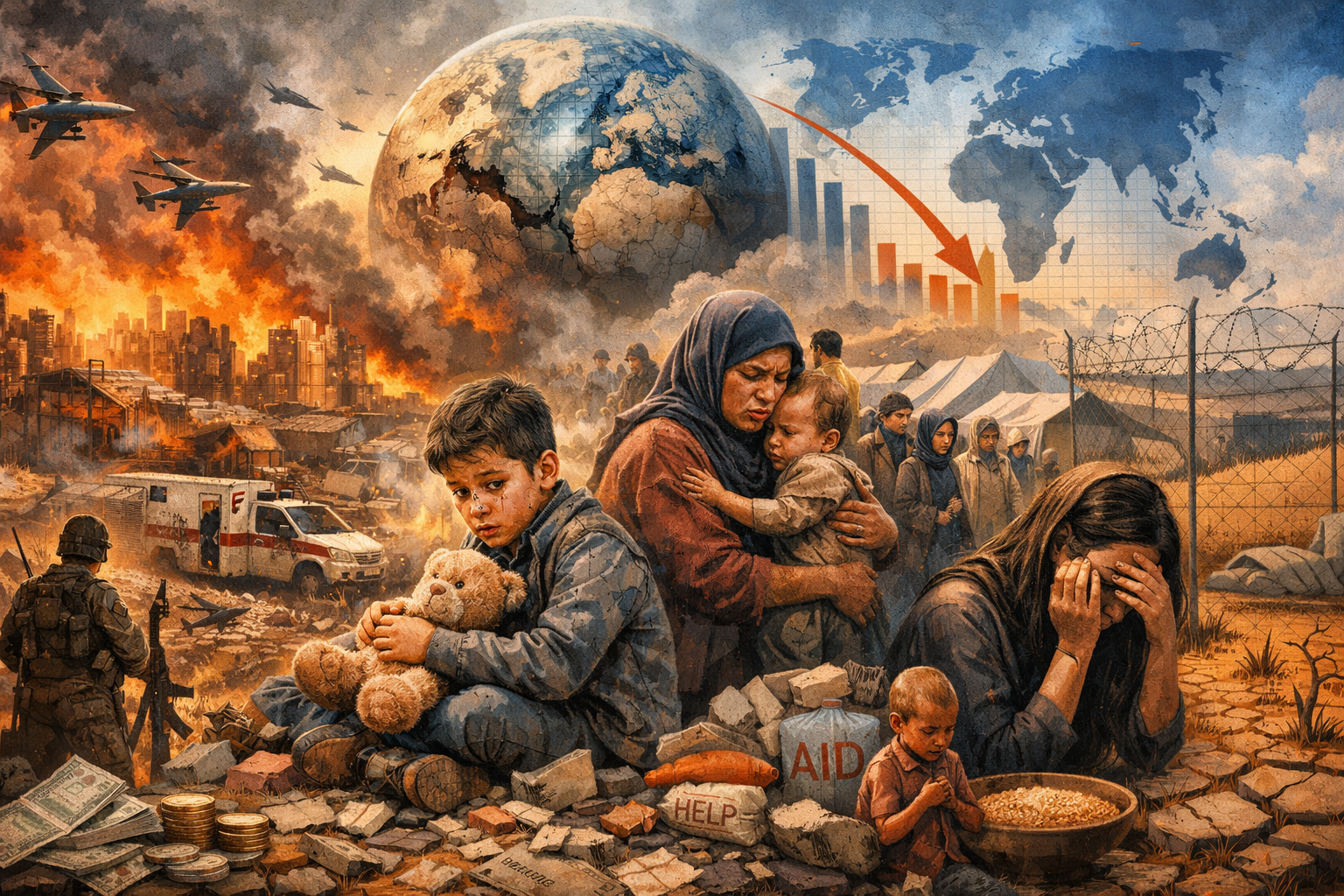
The global landscape in 2026 presents a deeply troubling reality. Armed conflicts are now more widespread than at any point since World War II, bringing severe consequences for civilian populations across the globe.
This analysis draws from recent surveys, institutional research, and humanitarian assessments to understand:
- The scale of human suffering
- The types of consequences unfolding
- The number of countries affected directly and indirectly
Part I: The Scale of Suffering — What Data Reveals
Global Humanitarian Crisis in Numbers
- 239 million people are in humanitarian need worldwide
- 117.3 million people are forcibly displaced
- 20 countries are identified as most at risk
- These countries account for:
- 12% of the global population
- 89% of humanitarian needs
- Nearly 50% of extreme poverty
Survey Insights: The Human Experience of War
A global youth-focused study reveals alarming mental health trends:
- 43% of youth rate their mental health as poor or fair
- Only 55% report it as good or better
- 75% of adult mental health conditions begin before age 24
- Only 40% have ever accessed mental health support
- Just 12% received consistent care (11+ visits annually)
Barriers to Seeking Help
- Lack of trust
- Fear of not being taken seriously
- Fear of being a burden
Vulnerable Groups
- Youth with disabilities: 31% report good mental health
- LGBTQI+ youth: 40% report good mental health
These groups face compounded psychological and social challenges.
Part II: Types of Suffering — Direct and Indirect Consequences
1. Physical Violence and Direct Harm
- 1,000 deaths while seeking medical care (first half of 2024)
- Attacks on schools increased by 50%
- Ukraine’s energy infrastructure damage rose by 33.7%
Global Violence Beyond War Zones
- 500,000 deaths annually due to violence
- Two-thirds are intentional homicides
- Economic cost: $2.6 trillion (2023)
2. Forced Displacement
- 117.3 million forcibly displaced globally
- 58% are internally displaced
- 70% are women and children
Most Affected Countries
Sudan, Colombia, Syria, Yemen, DR Congo, Afghanistan, Ukraine, Myanmar, Nigeria, Somalia
3. Gender-Based Violence
- 1 in 3 women globally experiences violence
- Rates increase by 34% in conflict zones
4. Economic Devastation
- Global losses from conflict (2024): $20 trillion
- Equivalent to 11.6% of global GDP
Ukraine Case Study
- Recovery needs: $588 billion
- Total losses: $666.7 billion
- Agriculture recovery: $55+ billion
5. Food Insecurity
- 318 million people currently food insecure
- Additional 45 million at risk if conflicts persist
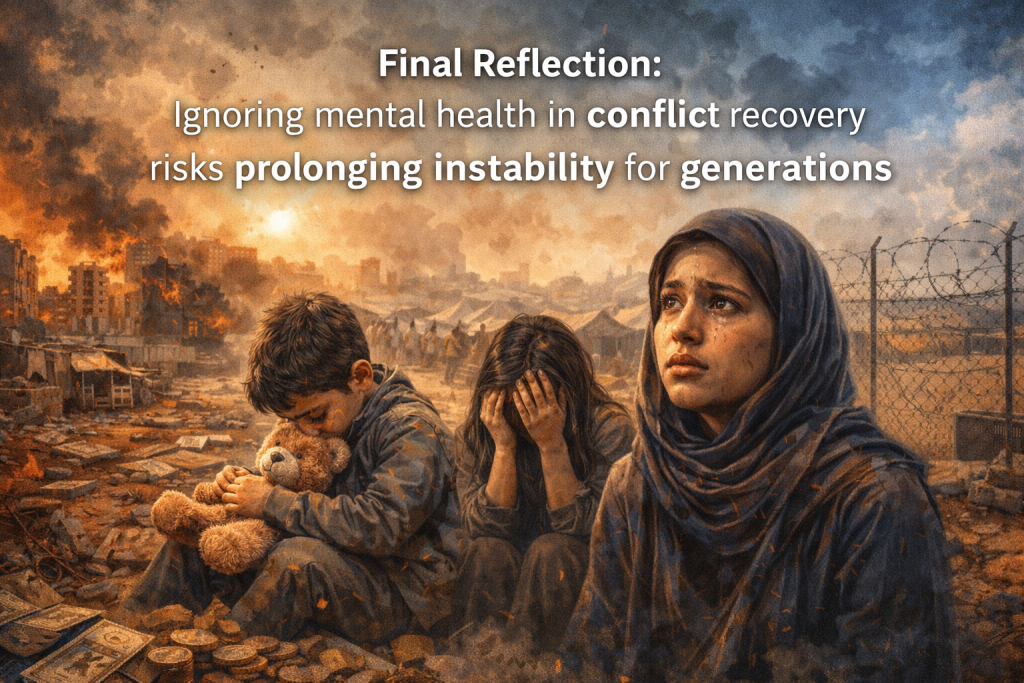
6. Mental Health & Intergenerational Trauma
Research shows trauma extends beyond one generation:
- Biological impacts (inflammation, cellular aging)
- Emotional patterns passed through families
- Long-term disruption of parent-child relationships
Key Insight:
Mental health is deeply linked to social conditions such as education, poverty, and environment.
Part III: Global Spread of Conflict
Direct Conflict Zones
- Active conflicts exist in 100+ countries worldwide
Regional Conflict Dynamics
- Middle East: Expanding multi-front conflicts
- South Asia: Renewed hostilities post-ceasefire collapse
- Africa: Intensifying regional tensions and insurgencies
- Americas: Cartel violence and economic disruptions
Indirectly Affected Nations
Even countries far from war zones face consequences:
- Rising fuel and food prices
- Increased shipping and insurance costs
- Tourism decline
- Economic instability
High-Risk Countries (Watchlist)
Includes:
Sudan, Syria, Yemen, Afghanistan, Somalia, DR Congo, Myanmar, Ethiopia, Ukraine, and others
Part IV: Structural Forces Amplifying Suffering
The “New World Disorder”
Key Characteristics
- Increased geopolitical rivalry
- Shifting alliances
- Short-term, transactional politics
Three Major Drivers of Crisis
- Decline in global cooperation
- Commercialization of conflict
- Deliberate violations of human rights
Climate-Conflict Nexus
- Climate shocks worsen instability
- Livelihood destruction increases displacement
- Conflict-prone nations face overlapping risks
Part V: The Road Ahead — Long-Term Consequences
Generational Recovery
- Recovery timelines: 50–60 years
- Education disruptions threaten future economies
- Reconstruction must include psychological healing
Projected Global Outcomes
If trends continue:
- Rising displacement beyond current 117 million
- Increasing hunger affecting tens of millions
- A global mental health crisis
- Widening inequality and poverty
- Long-term societal instability