
Unsolved Human Incidents in the Modern Era: Disappearances, Silence, and the Limits of Investigation
Unsolved human incidents continue to challenge modern science, law enforcement, and society. Despite advancements in forensic technology, data analytics, and global cooperation, thousands of cases remain unresolved every year. These



Unsolved human incidents continue to challenge modern science, law enforcement, and society. Despite advancements in forensic technology, data analytics, and global cooperation, thousands of cases remain unresolved every year. These incidents are not just mysteries—they reflect deeper structural, psychological, and societal complexities. Recent research journals and global reports highlight that disappearance is rarely random; instead, it often lies at the intersection of vulnerability, crime, and systemic gaps.
The Global Scale of Disappearances
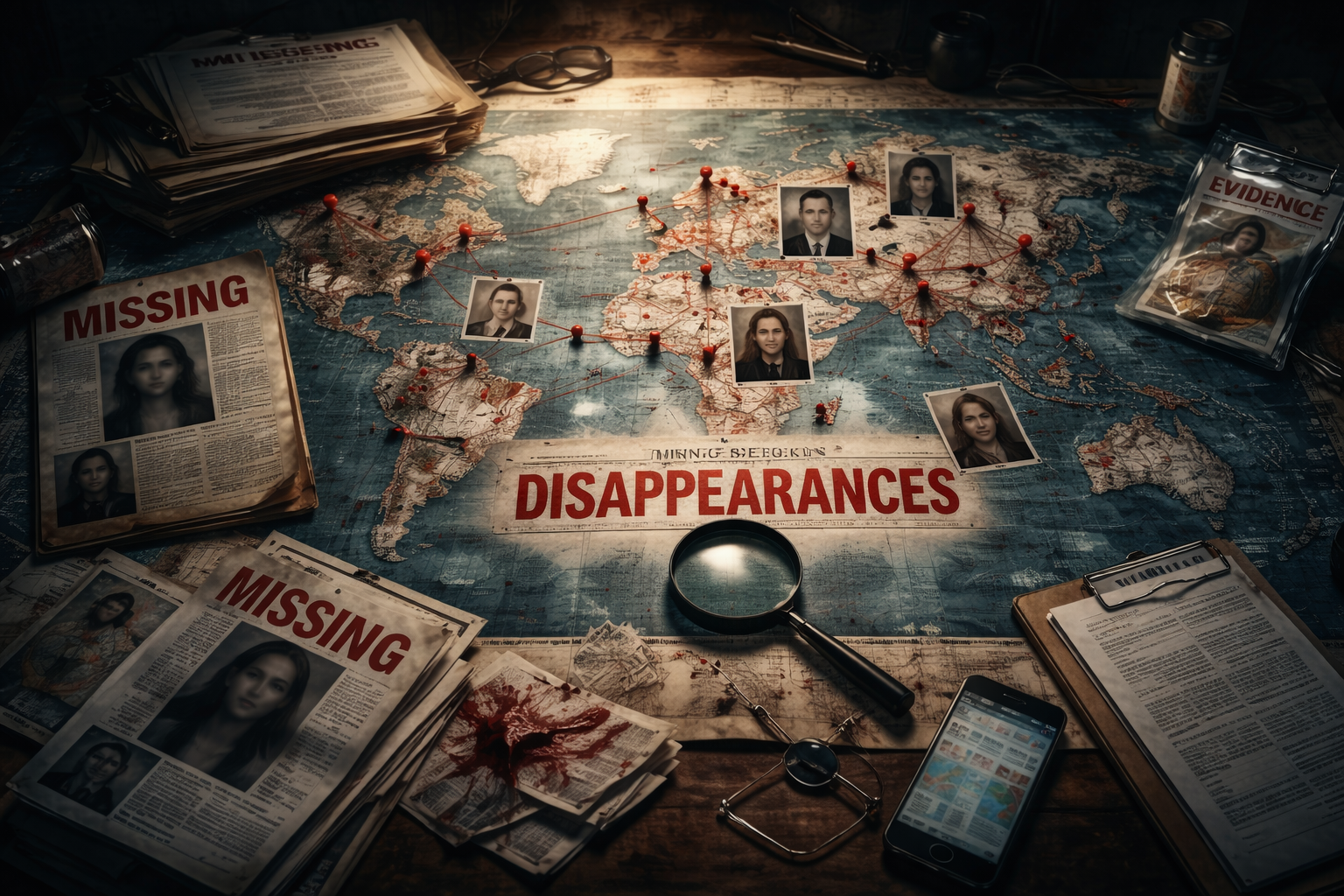
Recent international findings indicate that missing persons cases are not isolated anomalies but part of a global crisis. In 2025, a United Nations review examined 689 enforced disappearance cases across 41 countries, revealing ongoing systemic failures in investigation and accountability.
Conflict zones and politically unstable regions contribute significantly to this phenomenon. For example, humanitarian reports show that thousands of families remain without answers for over a decade, particularly in regions like South Sudan and Syria, where displacement and war obscure evidence and delay justice.
These figures highlight that unsolved human incidents are often tied to governance, human rights violations, and institutional inefficiencies rather than mere coincidence.
Research Insights: The Concept of “Missingness”
A 2025 research study introduced the concept of “missingness”, framing disappearances as outcomes of structural and societal forces rather than isolated events. According to the study:
- Over 2,300 documented cases were analyzed in a single regional database.
- Nearly 40% of cases remained unresolved, reflecting investigative limitations.
- Marginalized communities were disproportionately represented, indicating systemic inequality.
The research emphasizes that poverty, lack of digital access, and social invisibility significantly reduce the chances of case resolution. It suggests that disappearance is often a layered outcome involving environment, identity, and access to resources.
Case Study: Long-Term Missing Women and “No-Body” Crimes
A 2025 criminology journal examining missing women in Ireland provides critical insights into unresolved cases:
- Out of 38 long-term missing cases, 12 were later classified as homicides without recovered bodies.
- Evidence such as abandoned belongings and inconsistent testimonies frequently appeared.
- Psychological narratives like suicide were often prematurely assumed, masking potential crimes.
These findings reveal a major investigative challenge: when no body is found, legal and forensic limitations delay justice, allowing cases to remain unresolved for decades.
Cold Cases and Modern Breakthroughs
Even decades-old mysteries continue to evolve. A notable development occurred in 2025 when investigators discovered a submerged vehicle linked to a family disappearance from 1958. Human remains recovered from the site reopened the case after nearly 70 years of uncertainty.
Such breakthroughs demonstrate the importance of persistence and technological advancement. However, they also highlight how long families must wait for closure, and how many similar cases remain unresolved due to lack of evidence.
Patterns Behind Unsolved Incidents
Across research journals and case studies, several recurring patterns emerge:
1. Environmental Concealment
Bodies or evidence lost in water, forests, or conflict zones significantly reduce recovery chances.
2. Social Vulnerability
Marginalized individuals face higher risks of disappearing and lower chances of being found.
3. Investigative Bias and Assumptions
Early misclassification (suicide, voluntary disappearance) can derail investigations.
4. Data Gaps and Reporting Issues
Reliance on incomplete or biased reporting systems leads to underrepresentation of cases.
The Role of Modern Science and Its Limitations
Advancements such as DNA profiling, forensic anthropology, and AI-based data analysis have improved case-solving rates. Yet, limitations remain:
- Lack of initial evidence in many cases
- Delayed reporting
- Political or institutional interference
- Cross-border jurisdiction issues
Even with modern tools, human incidents often remain unsolved due to the complexity of human behavior and environmental variables.
Conclusion
Unsolved human incidents are not merely mysteries—they are reflections of deeper societal, structural, and investigative challenges. Research clearly indicates that disappearance is rarely accidental; it is often rooted in inequality, conflict, or overlooked warning signs.
While science continues to evolve, the resolution of these cases depends equally on social awareness, institutional accountability, and global cooperation. Until then, thousands of stories remain incomplete—echoing a silence that demands both attention and action.