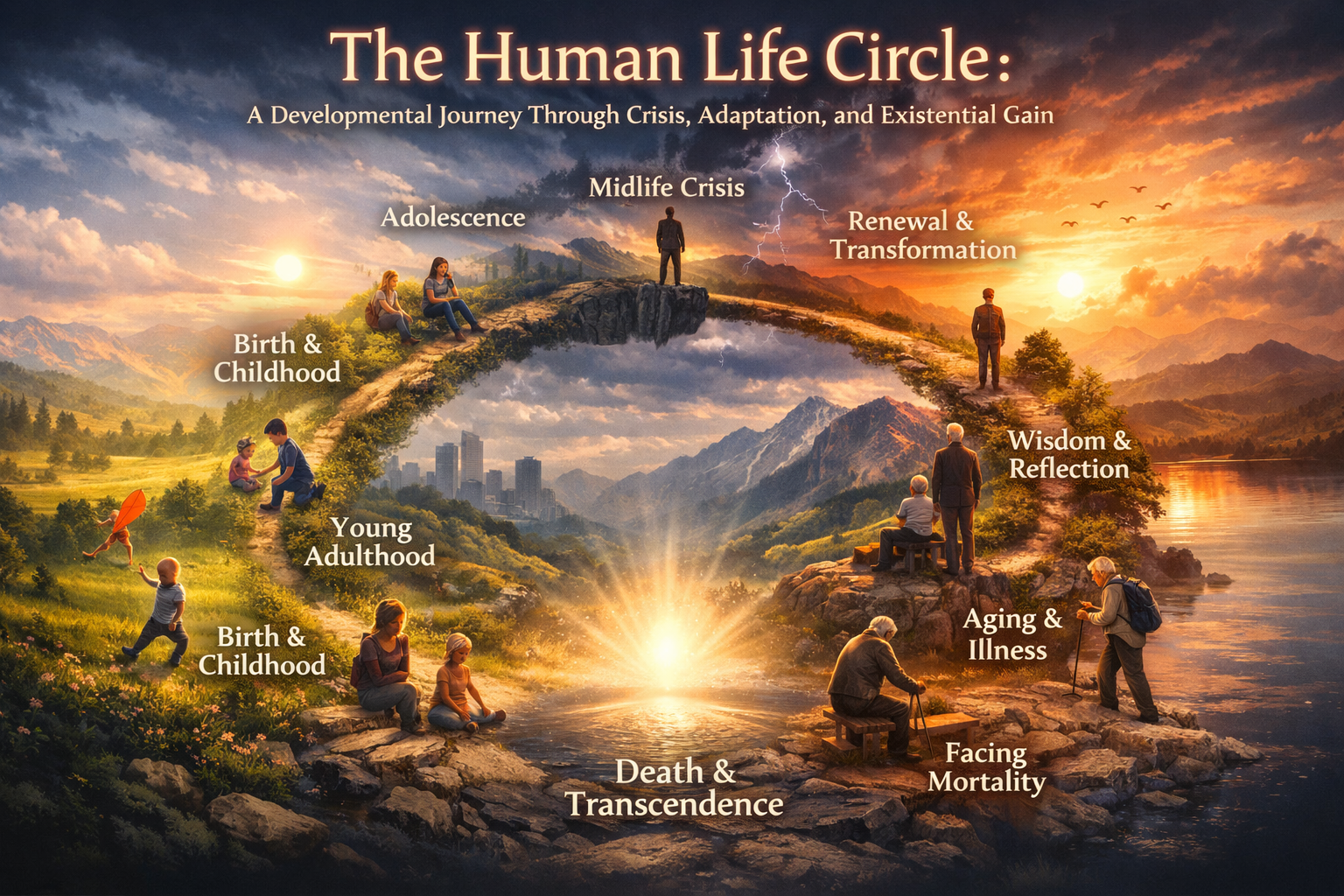
The Changing Landscape of Human Psychology: Emerging Issues in the Modern World (2025–2026)
Human psychology is undergoing a profound transformation in the 21st century. Rapid technological advancements, social shifts, and global crises are reshaping how individuals think, behave, and interact. Recent research from

Human psychology is undergoing a profound transformation in the 21st century. Rapid technological advancements, social shifts, and global crises are reshaping how individuals think, behave, and interact. Recent research from global institutions highlights that mental health and psychological well-being are no longer isolated concerns but central to societal development. Over 1 billion people worldwide live with mental health conditions, making it one of the most pressing human challenges today.
This article explores the latest psychological issues, emerging research trends, and future directions shaping human behavior in the modern era.
1.
Mental health disorders such as anxiety, depression, and stress-related conditions have reached unprecedented levels globally. According to the World Health Organization, these conditions are among the leading causes of disability and economic burden.
Key Issues:
- Rising anxiety and depression across all age groups
- Increasing suicide rates, especially among youth
- Lack of access to mental health services in developing regions
Research Insight:
Modern studies emphasize early intervention and preventive care, especially among young populations, as a critical strategy to reduce long-term psychological damage.
2. Digital Addiction and Social Media Psychology
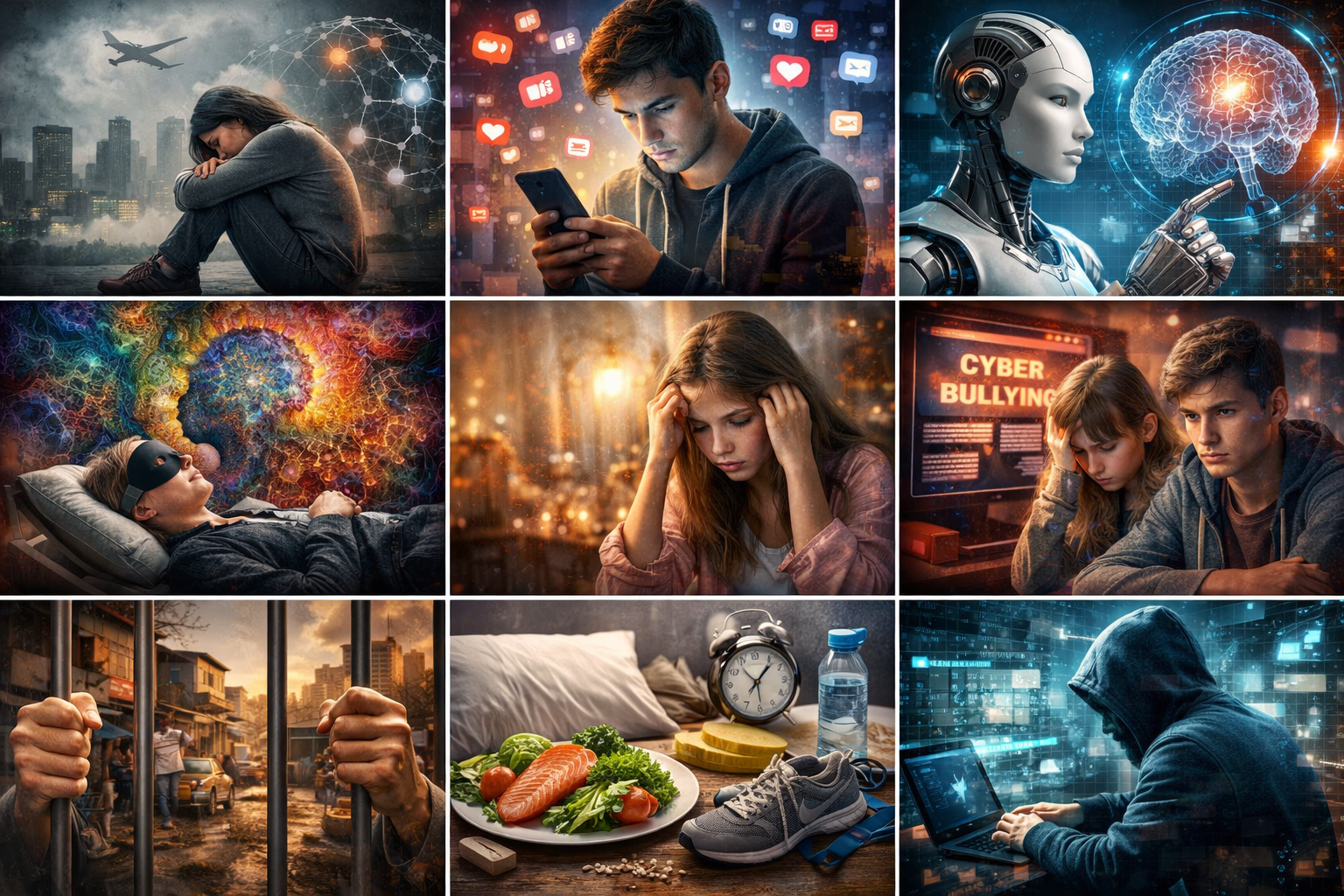
One of the most significant modern psychological challenges is digital dependency. Social media platforms are reshaping attention spans, emotional regulation, and self-perception.
Research Findings:
- Excessive smartphone use is linked to cognitive decline and emotional instability
- A 14-day digital detox significantly improved attention and well-being in participants
- Social comparison and online validation contribute to anxiety and depression
Psychological Impact:
- Dopamine-driven reward cycles
- Reduced real-life social interaction
- Increased loneliness despite connectivity
3. Artificial Intelligence and Psychological Dependence
The integration of AI into daily life has introduced a new psychological dimension. AI chatbots and virtual companions are increasingly used for emotional support.
Emerging Concerns:
- Emotional dependency on AI systems
- Self-diagnosis without professional guidance
- Development of “AI-induced psychological disturbances”
Experts warn that over-reliance on AI for therapy may distort human relationships and emotional expectations.
Research Insight:
AI-based systems can predict mental health states using behavioral data, offering new opportunities for early diagnosis—but also raising privacy and ethical concerns.
4. The Rise of Psychedelic-Assisted Therapy
A major shift in psychological research is the renewed interest in psychedelic substances for treating mental disorders.
Scientific Breakthrough:
Recent large-scale brain studies have identified a common “neural fingerprint” across psychedelic drugs, showing how they enhance communication between brain networks.
Applications:
- Treatment-resistant depression
- Post-traumatic stress disorder (PTSD)
- Addiction recovery
Future Direction:
While promising, this field requires strict regulation and further clinical trials to ensure safety and ethical use.
5. Lifestyle Psychology: Sleep, Diet, and Behavior
Modern research increasingly links daily lifestyle habits with psychological well-being.
Key Findings:
- Poor sleep directly affects emotional regulation
- Diet influences mood and cognitive function
- Physical activity improves mental resilience
Studies highlight that mental health is not purely cognitive but biopsychosocial, involving body, mind, and environment.
6. Youth Mental Health Crisis
Young people are at the center of the current psychological crisis. Academic pressure, social media exposure, and identity conflicts are contributing to rising distress levels.
Key Challenges:
- Increased rates of anxiety and depression
- Identity confusion and existential stress
- Cyberbullying and online harassment
This has led global organizations to classify youth mental health as a public health emergency, requiring urgent intervention.
7. Cultural and Social Inequality in Mental Health
Psychological experiences are deeply influenced by culture, society, and economic conditions.
Emerging Issues:
- Stigma around mental health in traditional societies
- Lack of culturally sensitive therapy models
- Inequality in access to mental health services
Modern psychology is shifting toward inclusive and culturally adaptive approaches to address these disparities.
8. Cyberpsychology and Human Behavior
With increasing online interaction, cyberpsychology has emerged as a major field of study.
Focus Areas:
- Online identity formation
- Digital aggression and trolling
- Behavioral changes due to virtual environments
Research shows that human-computer interactions can even predict mental health conditions, opening new frontiers in psychological assessment.
Conclusion
Human psychology is evolving in response to rapid technological, social, and environmental changes. From digital addiction and AI dependency to global mental health crises and innovative therapies, the field is expanding into new and complex territories.
The future of psychology lies in:
- Integrating technology with ethical care
- Promoting early intervention strategies
- Building culturally inclusive mental health systems
- Balancing human connection with digital advancement
Understanding these emerging issues is essential not only for researchers and professionals but for society as a whole. As the human mind adapts to a changing world, psychology remains the key to navigating the challenges of modern existence.