Ethical Thinking in the 21st Century: Navigating Morality in a Rapidly Changing World
The Rising Need for Ethical Thinking Ethical thinking has always been a cornerstone of human civilization. From ancient philosophical traditions to modern legal systems, the concept of right and wrong

The Rising Need for Ethical Thinking
Ethical thinking has always been a cornerstone of human civilization. From ancient philosophical traditions to modern legal systems, the concept of right and wrong has guided human behavior and societal development. However, in the 21st century, ethical thinking is no longer confined to philosophical discussions—it has become a critical survival tool in a rapidly evolving world.
With the rise of artificial intelligence, digital influence, environmental crises, and global interconnectedness, humanity is facing complex moral dilemmas that demand deeper awareness, critical reasoning, and responsible action.
Understanding Ethical Thinking
Ethical thinking refers to the ability to evaluate actions, decisions, and systems based on principles of fairness, justice, responsibility, and respect for life. It goes beyond rules and laws, focusing on intention, impact, and long-term consequences.
At its core, ethical thinking involves:
- Recognizing moral issues
- Evaluating different perspectives
- Making informed and responsible decisions
- Taking accountability for outcomes
It is not static; it evolves with society, culture, and technological advancements.
Ethical Challenges in the Modern World
1. Technology and Artificial Intelligence
The rise of AI and automation has introduced new ethical questions:
- Should machines make life-and-death decisions?
- How should data privacy be protected?
- Who is responsible for AI mistakes?
Bias in algorithms, surveillance systems, and digital manipulation are pressing concerns. Ethical thinking is essential to ensure technology serves humanity rather than controls it.
2. Digital Behavior and Social Media Influence
The digital world has transformed communication but also created ethical dilemmas:
- Spread of misinformation
- Cyberbullying and online harassment
- Addiction and mental health issues
Ethical responsibility in digital spaces is often ignored due to anonymity and lack of accountability.
3. Environmental Responsibility
Climate change and environmental degradation raise fundamental ethical questions:
- Do humans have the right to exploit nature endlessly?
- What responsibility do we have toward future generations?
Sustainable living is no longer a choice—it is a moral obligation.
4. Economic Inequality and Social Justice
The widening gap between rich and poor challenges global ethics:
- Fair distribution of resources
- Access to education and healthcare
- Corporate responsibility
Ethical thinking demands systems that prioritize human dignity over profit.
The Role of Youth in Ethical Transformation
Today’s youth are at the forefront of ethical change. With access to information and global platforms, they have the power to influence decisions, raise awareness, and challenge unjust systems.
However, they also face distractions:
- Digital addiction
- Loss of cultural and moral grounding
- Peer pressure and identity confusion
Ethical education must focus on developing critical thinking, empathy, and self-awareness among young individuals.
Ethical Thinking in the Future
1. AI and Machine Ethics
Future societies will require ethical frameworks for machines:
- Programming moral decision-making into AI
- Ensuring fairness and transparency
- Preventing misuse of autonomous systems
Ethics will become a part of engineering and technological design.
2. Bioethics and Human Enhancement
Advancements in genetics and biotechnology will challenge human identity:
- Genetic modification
- Cloning and artificial life
- Extending human lifespan
The question will not be “Can we do it?” but “Should we do it?”
3. Global Ethical Frameworks
As the world becomes more interconnected, universal ethical standards will emerge:
- Global human rights
- Cross-cultural moral understanding
- International cooperation
Ethics will move beyond borders, requiring collective responsibility.
4. Conscious Living and Inner Ethics
Future ethical thinking will not only focus on external actions but also internal awareness:
- Mindfulness and self-reflection
- Emotional intelligence
- Alignment between thought, word, and action
Inner transformation will become as important as external behavior.
Building Ethical Intelligence
To navigate the future, individuals must develop ethical intelligence:
- Critical Thinking: Questioning information and intentions
- Empathy: Understanding others’ perspectives
- Responsibility: Owning one’s actions
- Integrity: Staying true to moral values
- Awareness: Recognizing the impact of decisions
Education systems must integrate ethics as a core subject, not an optional one.
Ethics as the Foundation of Humanity’s Future
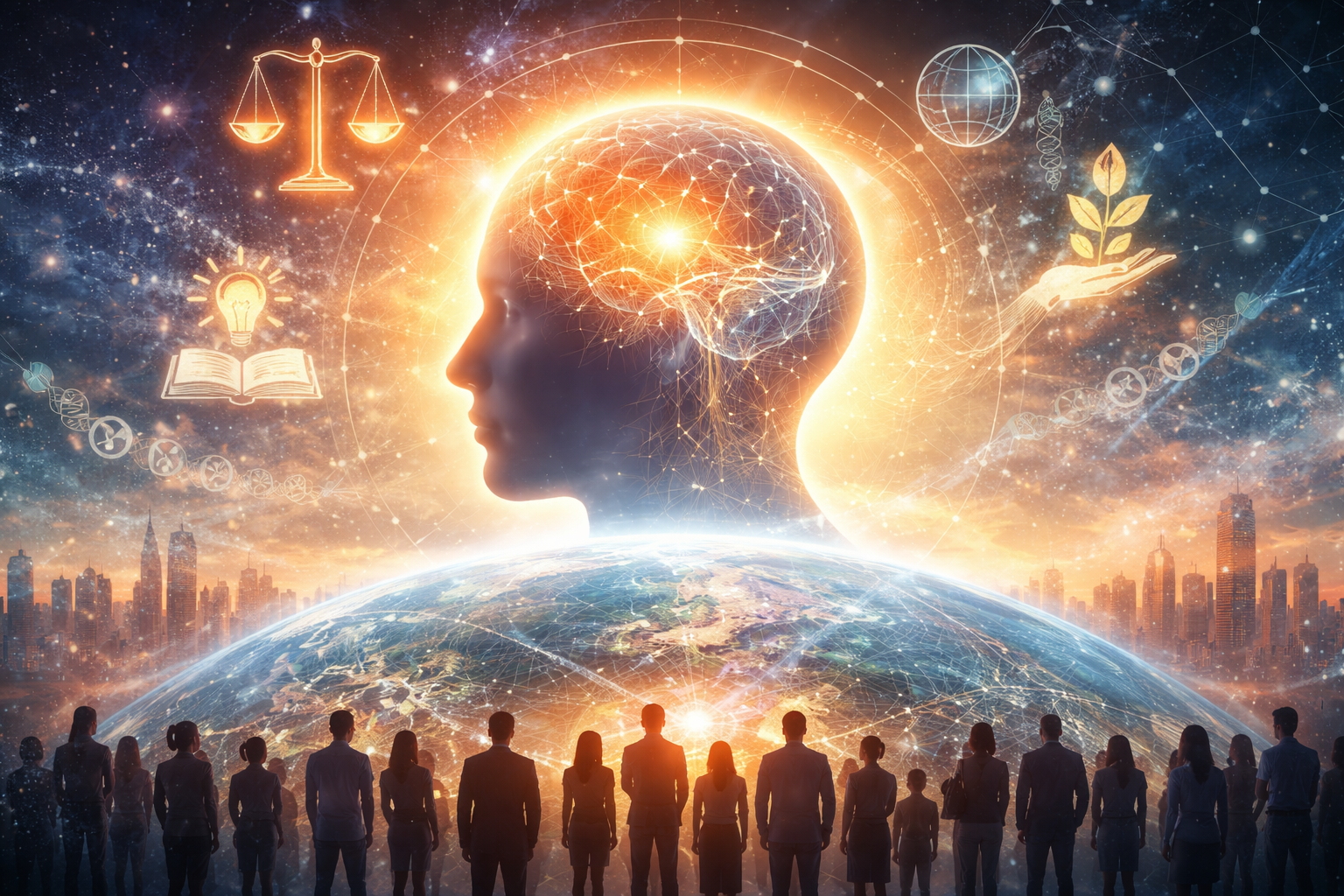
Ethical thinking is no longer optional—it is essential for the survival and progress of humanity. In a world driven by technology, power, and rapid change, ethics acts as a guiding compass.
The future will not be defined solely by innovation but by the values that shape that innovation. A society without ethics risks losing its humanity, while a society grounded in ethical thinking can achieve true progress—balanced, sustainable, and inclusive.
The responsibility lies with each individual to think, question, and act ethically—not just for personal growth, but for the collective future of the world.