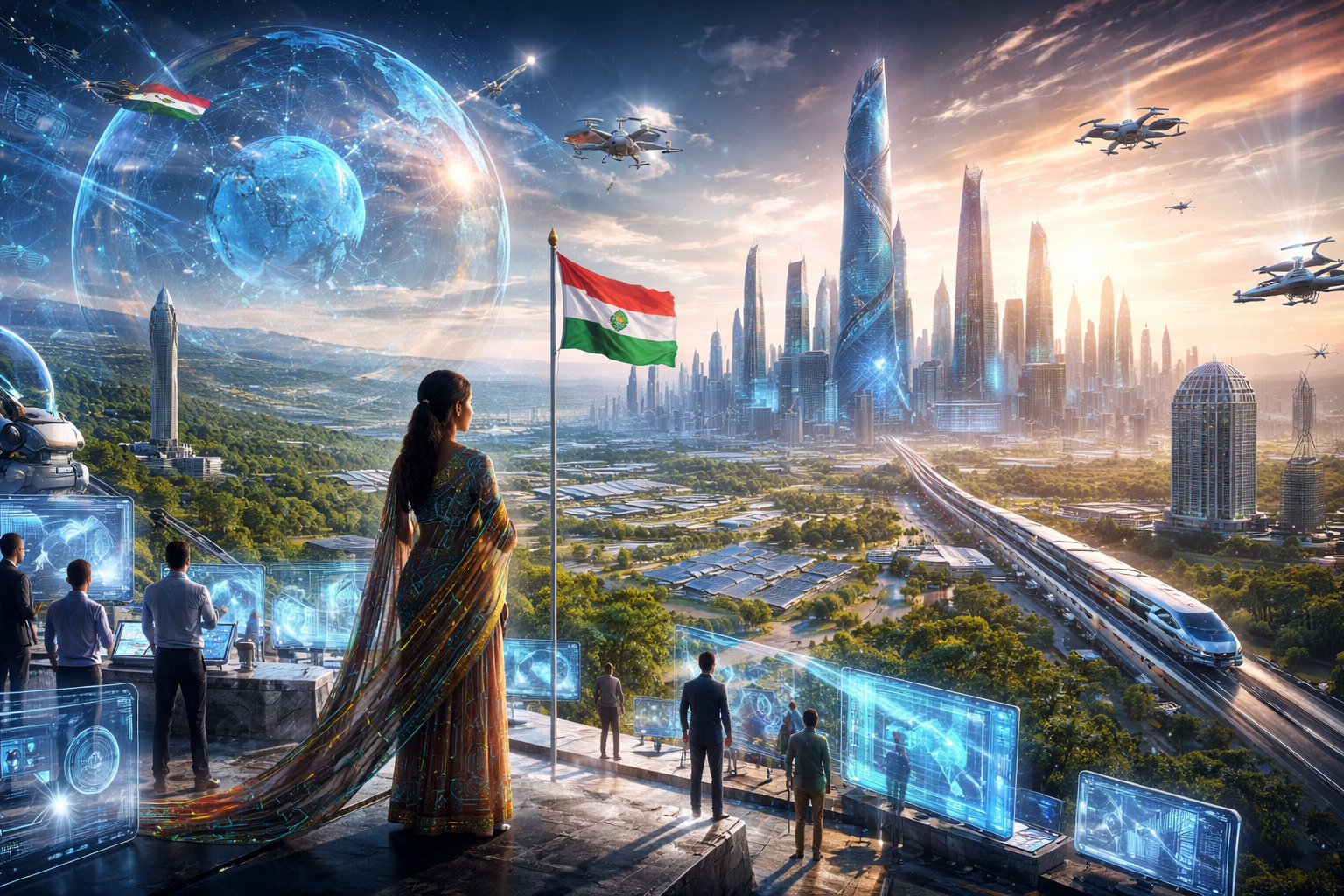
Ethical AI & Innovation in India: Navigating Growth, Global Tensions, and the Future of Responsible Intelligence
As artificial intelligence transforms economies and warfare alike, India stands at a critical crossroads—balancing rapid innovation with ethical responsibility. This article explores the nation’s evolving AI ecosystem, global tensions, and

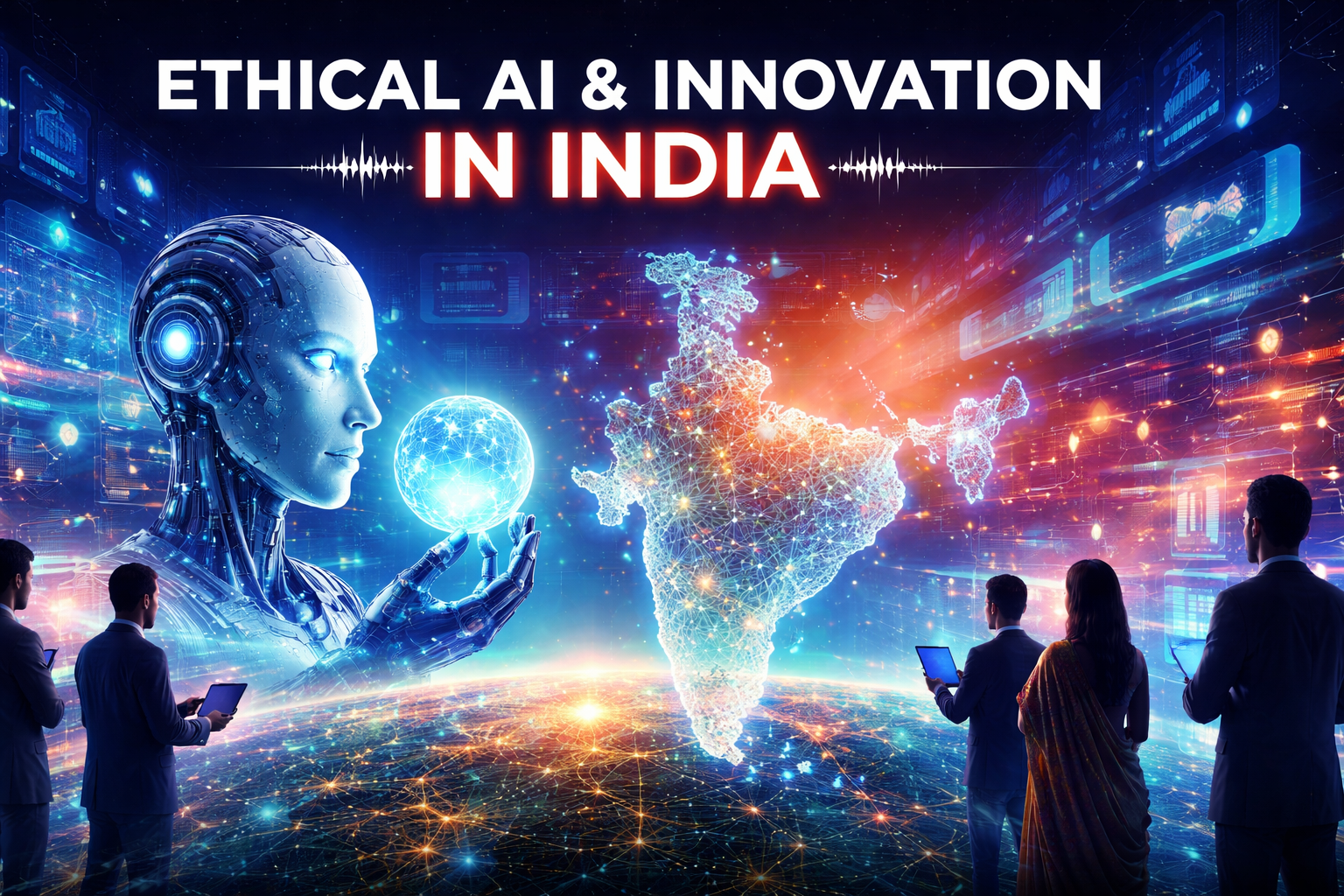
As artificial intelligence transforms economies and warfare alike, India stands at a critical crossroads—balancing rapid innovation with ethical responsibility. This article explores the nation’s evolving AI ecosystem, global tensions, and the urgent need for responsible AI frameworks grounded in transparency, fairness, and human values.
ETHICAL AI & INNOVATION IN INDIA: A GLOBAL AND NATIONAL PERSPECTIVE
1. The Rise of AI in India: Opportunity with Responsibility
India is rapidly emerging as one of the world’s leading AI-driven economies. With initiatives like the IndiaAI Mission and national digital infrastructure, AI is being integrated into healthcare, agriculture, governance, and education.
However, this growth is not neutral. AI systems shape decisions, influence societies, and redefine power structures. Research highlights that India follows a principles-based governance approach, combining regulations, voluntary guidelines, and sector-specific policies.
The core challenge is clear:
How can India scale AI innovation without compromising ethics, equity, and human dignity?
2. Ethical Challenges in the Indian Context (Research Insights)
Recent academic and policy research identifies unique ethical concerns specific to India’s socio-economic diversity.
a. Algorithmic Bias & Social Inequality
AI systems trained on biased datasets can reinforce caste, class, and regional inequalities. Ethical frameworks must address fairness in a highly diverse population.
b. Data Privacy and Surveillance
With rapid digitization, concerns around personal data misuse are rising. Studies in healthcare AI emphasize privacy, security, and consent as central ethical pillars.
c. Lack of Ethical Education
Only about 2% of Indian computing curricula include AI ethics in depth, highlighting a major gap in future workforce preparedness.
d. Regulatory Fragmentation
India currently relies on multiple laws like the IT Act (2000) and Digital Personal Data Protection Act (2023), but lacks a unified AI-specific legislation.
3. Global AI Ethics: A Fragmented Battlefield
AI is no longer just a technological tool—it is a geopolitical asset.
Across the world, ethical AI frameworks differ based on political and cultural systems:
- Western models emphasize individual rights and privacy
- China prioritizes state control and national security
- Europe focuses on human rights and regulation
Global research shows that despite hundreds of guidelines, there is still no universal ethical standard, though common principles like transparency, fairness, and accountability are widely recognized.
4. AI in Warfare: The New Ethical Crisis
One of the most critical dimensions of AI today is its role in modern warfare.
Key Concerns:
- Autonomous weapons making life-and-death decisions
- AI-driven surveillance and predictive targeting
- Reduced human accountability in combat
Research on AI warfare highlights the urgent need for governance frameworks to prevent misuse and ensure human control over lethal systems.
In a world already experiencing geopolitical tensions, AI risks becoming a force multiplier in global conflicts, leading to what many experts call a “silent algorithmic war.”
5. India’s Strategic Position in the Global AI Race
India is not just a participant—it is becoming a bridge between competing global AI ideologies.
Recent developments show:
- India advocating for a global ethical AI framework
- Formation of expert panels for AI governance and accountability
- Increasing focus on balancing innovation with public interest and transparency
At the same time, concerns remain that unchecked AI growth could deepen inequality and social fragmentation if ethics are ignored.
6. Innovation vs Ethics: The Core Dilemma
India’s AI journey is defined by a fundamental tension:
| Innovation Drive | Ethical Responsibility |
|---|---|
| Rapid digital growth | Data protection |
| AI startups & economy | Algorithm fairness |
| Global competitiveness | Human accountability |
| Automation & efficiency | Employment impact |
The challenge is not choosing one over the other—but integrating ethics into innovation itself.
7. Responsible AI Frameworks: The Way Forward
Research and policy discussions suggest a multi-layered approach:
a. Transparency & Explainability
AI systems must be understandable, not “black boxes.”
b. Accountability Mechanisms
Clear responsibility for AI decisions—especially in governance and warfare.
c. Inclusive Data Practices
Ensuring representation across India’s diverse population.
d. Ethical AI Education
Embedding ethics deeply into engineering and technology curricula.
e. Global Collaboration
AI ethics cannot be solved nationally—it requires international cooperation and treaties.
8. The Future: Ethical AI as a Civilizational Choice
AI is not just shaping industries—it is shaping humanity’s future.
India’s unique position—with its democratic values, diversity, and scale—offers an opportunity to create a human-centric AI model that balances innovation with responsibility.
The real question is not:
“How powerful can AI become?”
But rather:
“How ethical can we ensure AI remains?”
Conclusion
Ethical AI is no longer optional—it is essential.
As the world faces increasing technological competition and AI-driven geopolitical tensions, India must lead with a vision that combines:
- Innovation
- Inclusivity
- Responsibility
- Global cooperation
Because the future of AI is not just about intelligence—it is about conscience.