Future Concepts in a World of Conflict: How Emerging Technologies Are Reshaping India and the Global Order
As global tensions rise and nations compete for technological dominance, the future is no longer a distant vision—it is being engineered today. From AI-driven governance to quantum breakthroughs and bio-digital

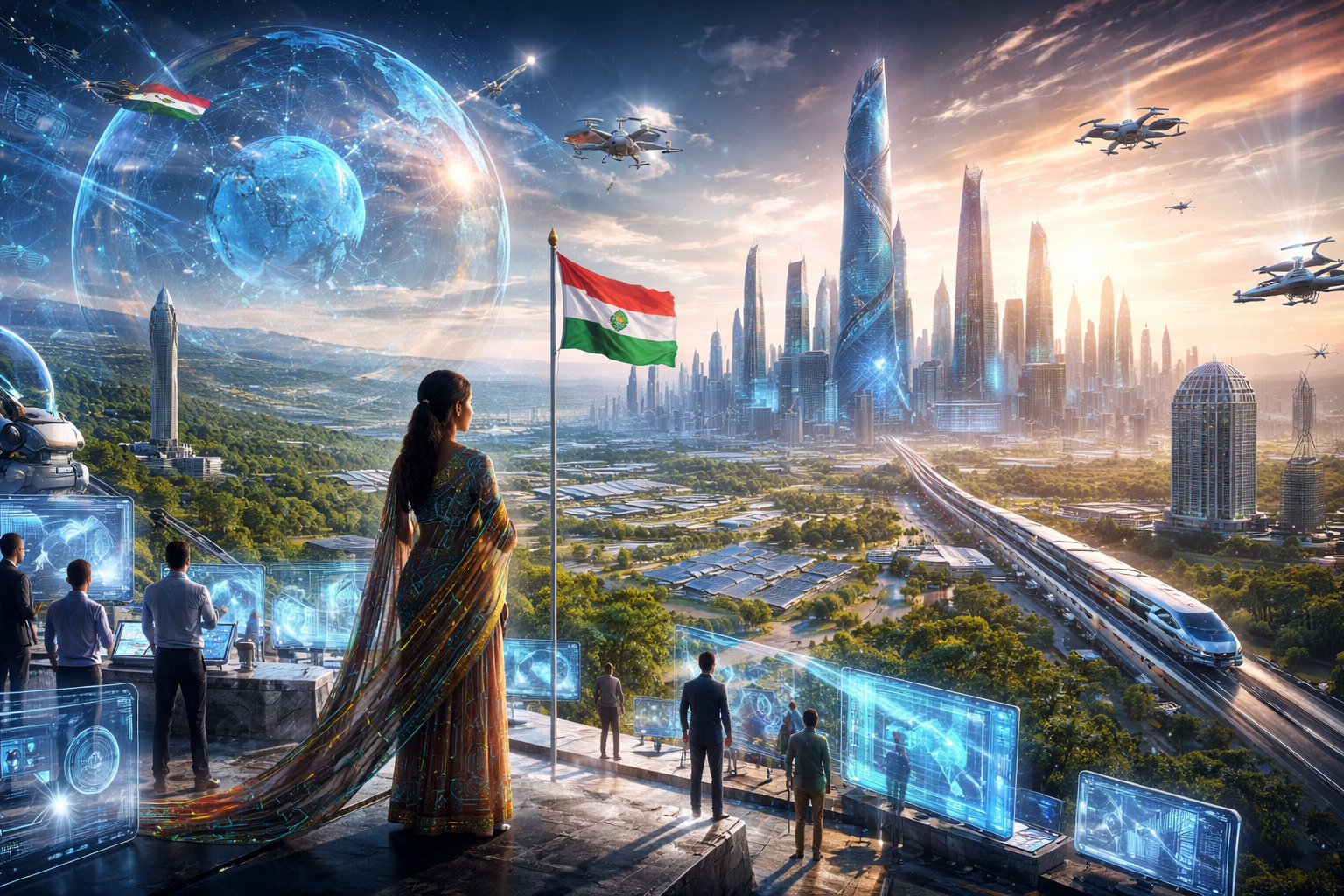
As global tensions rise and nations compete for technological dominance, the future is no longer a distant vision—it is being engineered today. From AI-driven governance to quantum breakthroughs and bio-digital convergence, India stands at a critical crossroads. This article explores the most powerful future technology concepts shaping economies, warfare, and human existence itself.
The Future Under Pressure
The 21st century is witnessing a rare convergence of rapid technological advancement and global instability. Trade wars, cyber conflicts, geopolitical rivalries, and resource scarcity are accelerating innovation at an unprecedented scale. Technology is no longer just about convenience—it is now deeply tied to national security, economic sovereignty, and global influence.
India, as one of the fastest-growing digital economies, is emerging as a strategic technology hub, balancing internal development with external pressures from global power blocs.
Technology Convergence: The Core of Future Concepts
Modern future concepts are not built on single technologies but on convergence—the fusion of AI, biotechnology, quantum computing, and advanced materials.
Research from global innovation frameworks highlights that convergence is transforming industries by integrating disciplines and creating entirely new systems of production and governance.
This means:
- AI + Biotechnology → Personalized medicine & synthetic life
- Quantum + Cybersecurity → Unbreakable encryption
- Space tech + AI → Autonomous planetary systems
For India, this convergence is visible in initiatives like:
- Digital public infrastructure (Aadhaar, UPI)
- Space-tech startups
- AI-driven governance systems
Artificial Intelligence as a Strategic Weapon
Artificial Intelligence has moved beyond automation—it is now a strategic asset in global competition.
Key future concepts:
- Autonomous warfare systems
- Predictive governance models
- AI-driven economic planning
Research indicates that AI is central to next-generation industries and is being integrated across sectors from healthcare to defense.
In a world facing cyber warfare and misinformation, technologies like generative watermarking are emerging to ensure digital trust and authenticity.
For India:
- AI is being used in agriculture, fintech, and surveillance
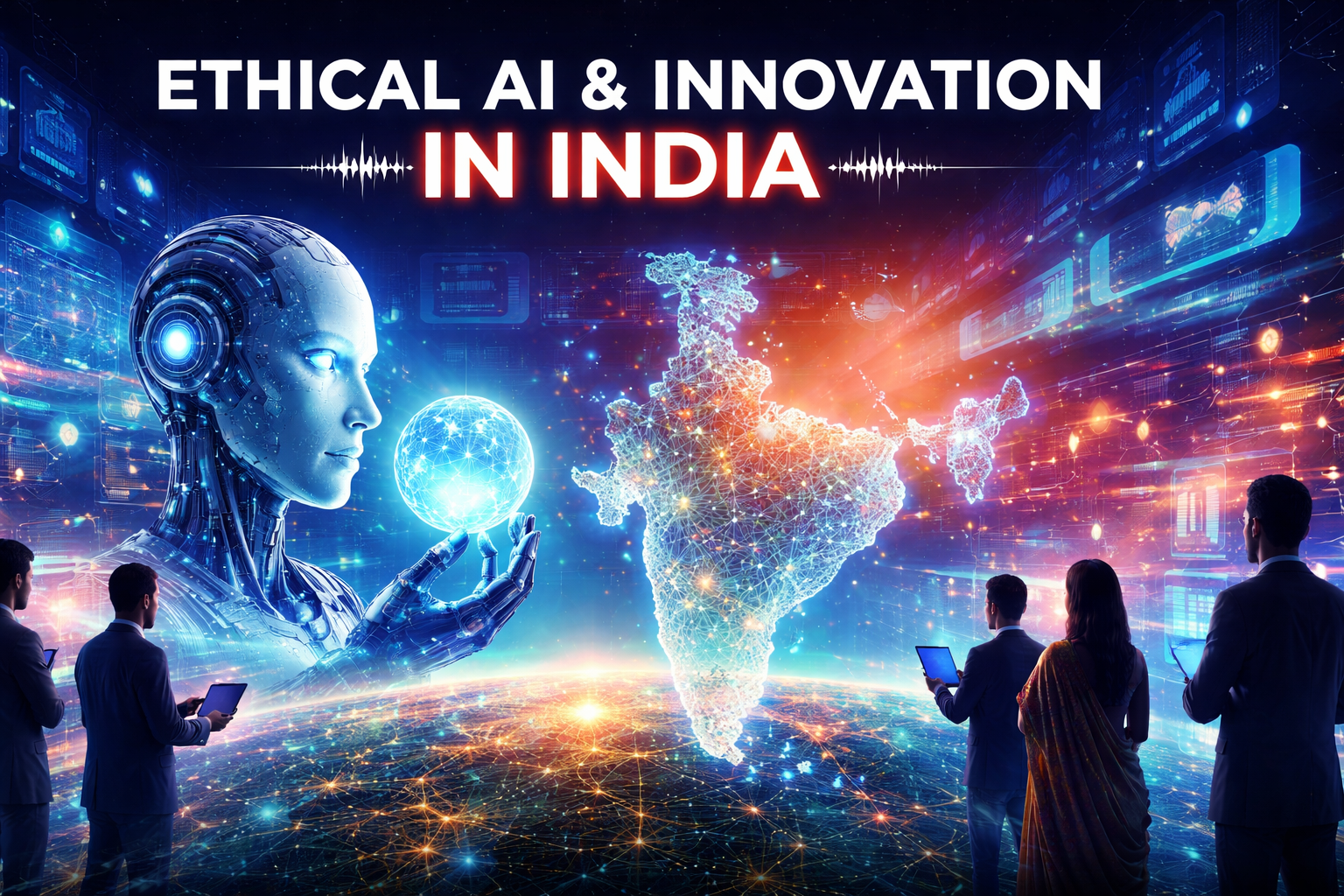
- Ethical AI frameworks are becoming critical to avoid misuse
Quantum Technologies and the Race for Supremacy
Quantum computing represents a paradigm shift in computational power.
Future implications:
- Breaking traditional encryption
- Accelerating drug discovery
- Optimizing national logistics and defense
Global powers are investing heavily in quantum research due to its military and intelligence advantages.
India’s National Quantum Mission signals:
- A push toward technological sovereignty
- Reduced dependence on foreign tech ecosystems
Bioengineering and Human-Centric Technologies
The future is not just digital—it is biological.
Emerging concepts include:
- Engineered living therapeutics
- Brain-computer interfaces
- Synthetic biology ecosystems
These technologies aim to merge human biology with machines, enabling:
- Disease eradication
- Cognitive enhancement
- Extended human lifespan
Global research shows a growing convergence between biology and technology to solve healthcare and sustainability challenges.
India’s biotech sector is expanding rapidly, especially in:
- Vaccine development
- Genomics
- Affordable healthcare innovation
Next-Generation Energy and Sustainability Tech
Future conflicts are increasingly about energy and resources.
Breakthrough concepts include:
- Structural battery materials
- Green nitrogen fixation
- Osmotic power systems
These innovations aim to:
- Reduce dependence on fossil fuels
- Enhance energy security
- Build climate-resilient economies
India’s push toward:
- Solar energy leadership
- Green hydrogen missions
positions it as a future energy powerhouse.
Industry 5.0: Human + Machine Collaboration
The world is transitioning from Industry 4.0 to Industry 5.0, where technology becomes human-centric rather than purely automated.
Research highlights key pillars:
- Collaborative robots (cobots)
- Extended reality (XR)
- Brain-computer interaction
- 5G/6G connectivity
For India:
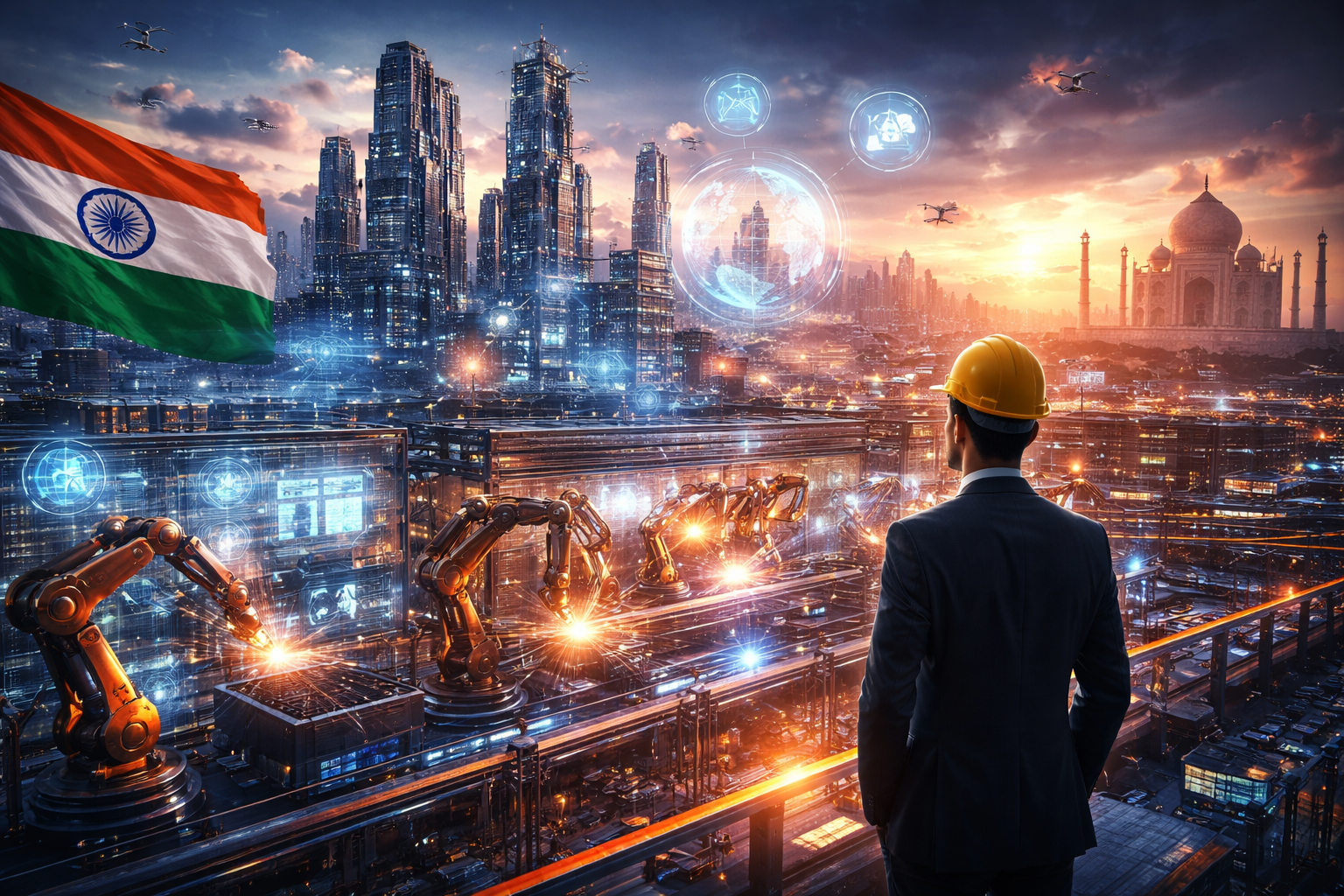
- Manufacturing is becoming smarter and adaptive
- Startups are driving innovation in robotics and immersive tech
- The workforce must evolve with new skills
Digital Warfare and Cybersecurity
Modern wars are increasingly invisible.
Future concepts in warfare:
- Cyber attacks on infrastructure
- AI-generated misinformation
- Autonomous defense systems
Technologies like:
- Blockchain-based security
- AI-driven threat detection
- Quantum encryption
are becoming essential for national defense.
India faces:
- Rising cyber threats
- Need for indigenous defense technologies
- Expansion of digital borders
Smart Nations: Data as the New Power
Data is becoming the new oil of the digital age.
Future-ready nations will rely on:
- Smart cities powered by IoT
- Real-time governance systems
- Digital identity frameworks
India’s large-scale digital infrastructure provides:
- A foundation for AI-driven governance
- Opportunities for inclusive growth
- Risks related to privacy and surveillance
Global Conflict and the Technology Divide
The world is entering a tech-driven geopolitical era:
- US–China tech rivalry
- Supply chain fragmentation
- Semiconductor wars
Technology is now shaping alliances and conflicts.
The World Economic Forum emphasizes that emerging technologies are not just innovations—they are tools for resilience, sustainability, and geopolitical balance.
India’s role:
- A neutral innovation leader
- A bridge between global tech ecosystems
- A self-reliant digital economy
Challenges for India’s Future
Despite progress, India faces critical challenges:
- Digital inequality
- Skill gaps in deep tech
- Ethical concerns in AI and surveillance
- Dependence on imported hardware
To overcome these:
- Investment in education and R&D is essential
- Policy frameworks must balance innovation and ethics
- Public-private collaboration must scale rapidly
Conclusion: The Future Is Strategic, Not Optional
Future concepts are no longer theoretical—they are strategic necessities in a world shaped by competition and uncertainty.
India stands at a defining moment:
- It can become a global leader in ethical, inclusive technology
- Or remain dependent on external innovation ecosystems
The future will belong to nations that:
- Embrace convergence
- Invest in human capital
- Balance power with responsibility
In an era of global tension, technology is both the battlefield and the solution.