Hidden Truths of a Fractured World: India’s Rise Amid Global Conflict and Silent Power Struggles
Beneath headlines and breaking news lies a deeper reality — a world shaped not just by visible wars, but by silent economic battles, shifting alliances, and strategic power plays. As

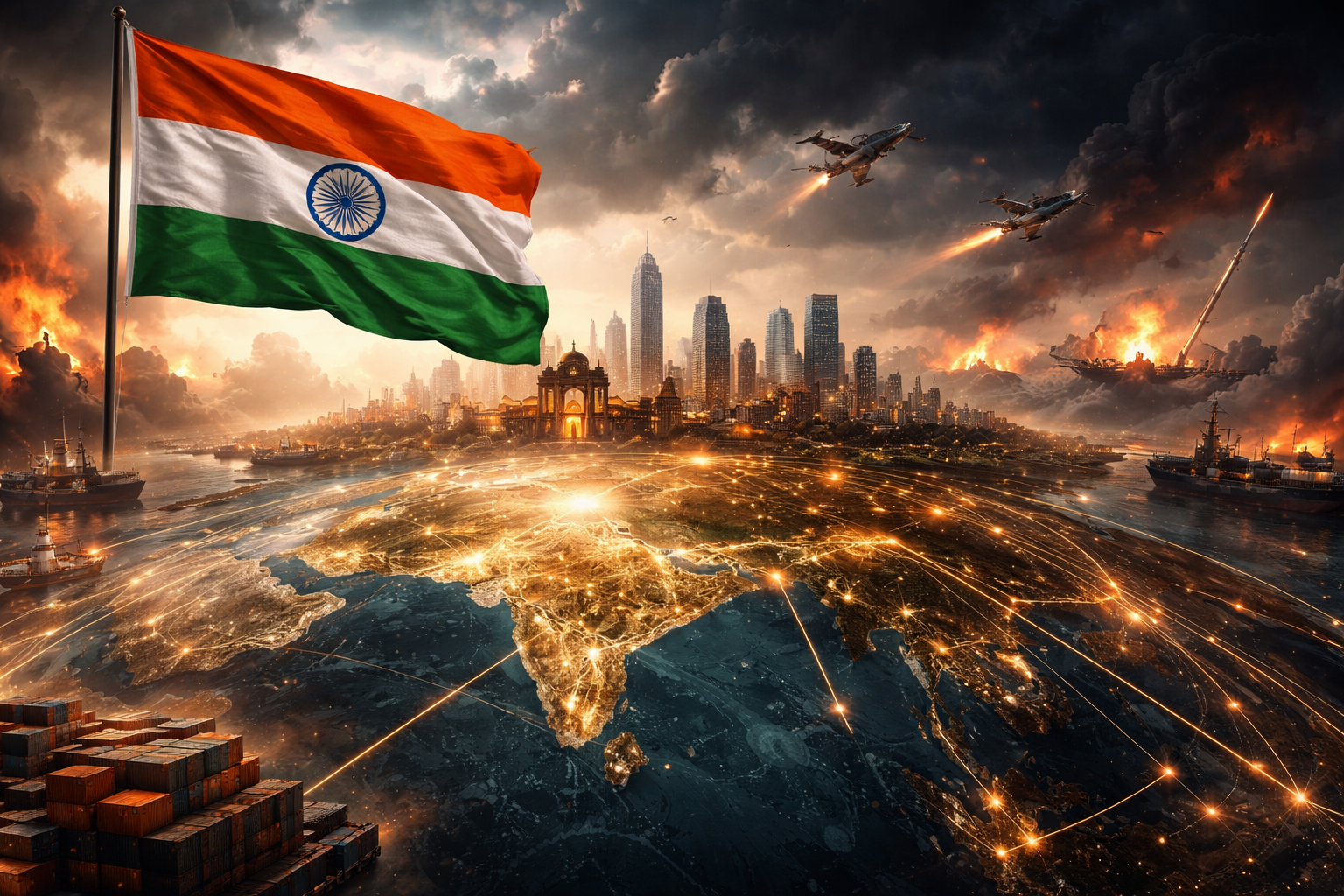
Beneath headlines and breaking news lies a deeper reality — a world shaped not just by visible wars, but by silent economic battles, shifting alliances, and strategic power plays. As global tensions rise, India stands at the crossroads of opportunity and risk. This article uncovers the hidden truths defining the future of nations.
HIDDEN TRUTHS OF A CHANGING WORLD
1. The Illusion of War: It’s Not Just Military Anymore
The most dangerous misunderstanding in today’s world is believing that war is fought only with weapons. The hidden truth is that modern conflict is largely economic, technological, and psychological.
Research shows that geopolitical conflicts now disrupt supply chains, trade routes, and financial systems, creating ripple effects across nations.
Trade wars, sanctions, and digital control systems are replacing traditional warfare. The battlefield has shifted from borders to markets, data, and influence.
For India, this means:
- Inflation driven by global energy conflicts
- Trade disruptions due to geopolitical rivalries
- Strategic pressure from multiple global powers
The war is real — but often invisible.
2. The Hidden Cost of Global Conflicts on India
India is not directly at war, yet it is deeply affected by global tensions.
Academic studies reveal:
- Conflicts like Russia–Ukraine and Middle East instability increase fuel, food, and raw material prices
- Supply chain disruptions raise manufacturing costs
- Inflation becomes a silent burden on citizens
Yet, there is another side — opportunity.
India has:
- Increased imports of discounted energy resources
- Strengthened global partnerships
- Positioned itself as a neutral yet strategic player
This dual reality is a hidden truth:
crisis for the world can become leverage for India.
3. The Rise of a Multipolar World Order
The post-Cold War unipolar world is fading. A new multipolar system is emerging — and it is unstable.
Global growth has slowed due to conflicts, with projections indicating economic strain and fragmentation.
Major power centers now include:
- United States
- China
- European Union
- Emerging India
But the hidden truth is this:
No single power controls the system anymore — and that makes the world more unpredictable than ever.
India’s strategy reflects this shift:
- Balancing relations with competing powers
- Expanding influence through BRICS, ASEAN, and EU ties
- Avoiding full alignment with any single bloc
This is not neutrality — it is calculated survival.
4. Supply Chains: The Silent Battlefield
One of the least discussed truths is that global supply chains are now weapons.
Research highlights:
- Countries are restructuring production networks
- “Decoupling” between global blocs is increasing
- Technology and manufacturing ecosystems are fragmenting
India is emerging as a beneficiary:
- Companies shifting production away from high-risk regions
- Increase in foreign direct investment
- Growth in manufacturing and digital sectors
But this comes with risk:
- Dependence on critical imports (energy, semiconductors)
- Vulnerability to sanctions from key countries
The hidden truth:
Economic interdependence is both strength and weakness.
5. The Energy Game: Power Behind Power
Energy is the backbone of modern geopolitics.
Conflicts in oil-rich regions directly impact India:
- Rising oil prices strain the economy
- Dependency on imports creates strategic vulnerability
- Diplomatic balancing becomes necessary
India’s response:
- Buying discounted oil from conflict zones
- Diversifying energy sources
- Investing in renewable energy alliances
This reveals a deeper truth:
Energy decisions are not economic — they are geopolitical survival strategies.
6. Information Warfare and Narrative Control
Another hidden truth is the rise of information warfare.
Control over:
- Media narratives
- Digital platforms
- Public perception
…has become as powerful as military strength.
Global powers influence:
- Political opinions
- Economic decisions
- Social stability
India faces:
- Internal narrative divisions
- External influence campaigns
- Digital misinformation challenges
The real war is not just about land —
it is about what people believe is true.
7. India’s Strategic Position: Between Fire and Opportunity
India today sits in a unique position:
- A fast-growing economy
- A major democracy
- A key player in global trade routes
Experts describe India as a potential stabilizing force in global geopolitics.
But this comes with pressure:
- Expectations to act as a mediator
- Risks of choosing sides
- Internal economic and social challenges
The hidden truth is simple:
India is not just rising — it is being tested.
8. The Future Truth: Conflict Will Define Growth
Modern growth is no longer separate from conflict.
Economists now argue that geopolitics has become a permanent force shaping global policy and economics.
This means:
- Growth will depend on strategic alliances
- Technology access will define power
- Economic resilience will determine survival
For India:
- The next decades are not just about development
- They are about navigating a world in constant tension
CONCLUSION: THE REALITY BEHIND THE WORLD ORDER
The world is not moving toward peace — it is evolving into a complex system of silent conflicts.
The hidden truths are:
- War is economic, not just military
- Power lies in supply chains and information
- Neutrality is a strategic choice, not weakness
- Crisis creates opportunity for those prepared
India stands at a turning point in history.
Not as a victim of global conflict —
but as a nation capable of reshaping the outcome.
The future will not belong to the strongest nation,
but to the most adaptable, strategic, and aware.