Reality vs Illusion: The Invisible War Shaping India and the World
In an age where truth is filtered, edited, and repeated until it feels real, the line between reality and illusion is fading. This article uncovers how psychological biases, media narratives,

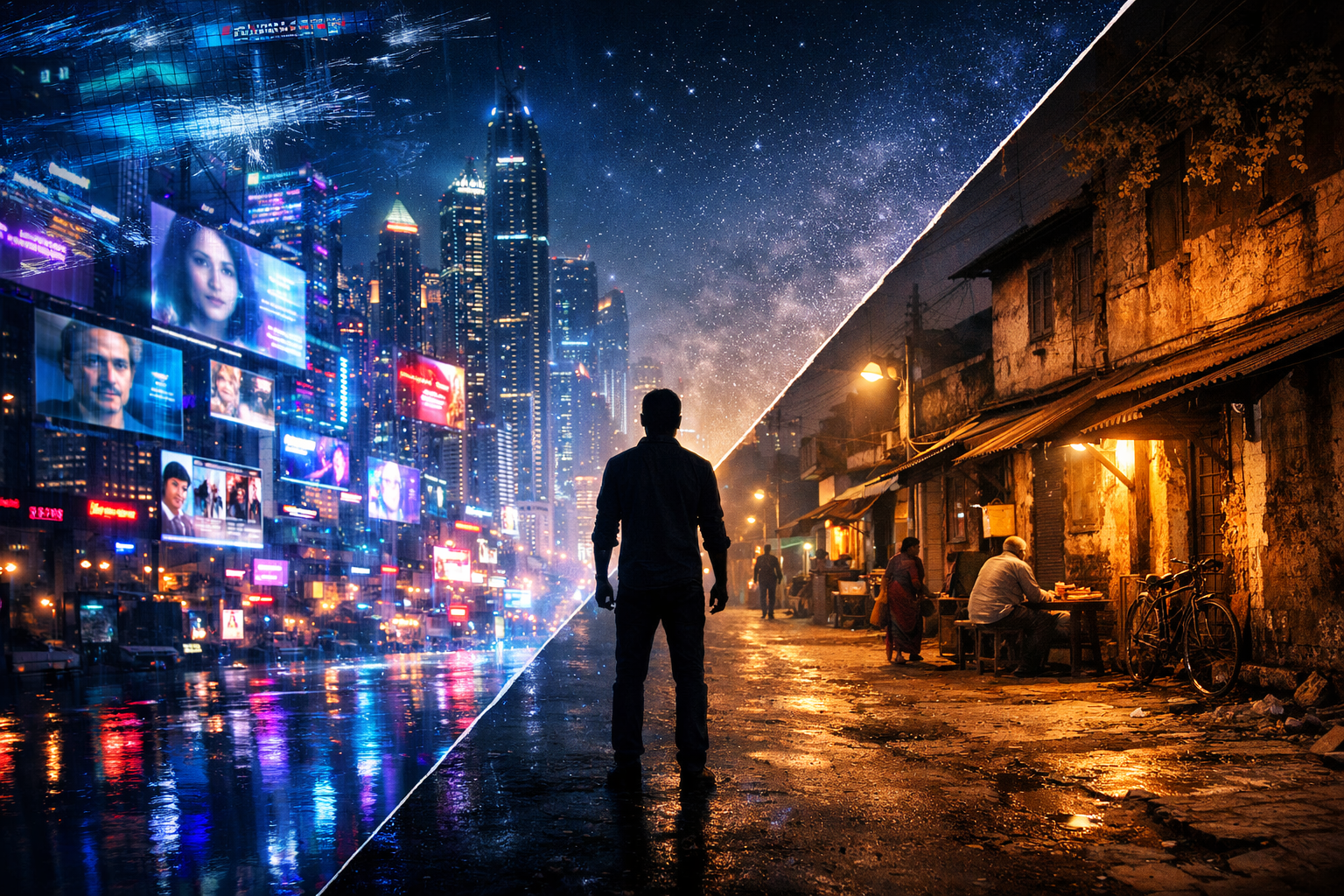
In an age where truth is filtered, edited, and repeated until it feels real, the line between reality and illusion is fading. This article uncovers how psychological biases, media narratives, and global tensions are reshaping perception—turning illusion into belief and belief into power.
Reality vs Illusion: The Invisible War Shaping India and the World
A World Where Truth is Negotiable
Reality was once defined by physical experience—what we see, touch, and verify. Today, reality is increasingly constructed, curated, and consumed. In India’s rapidly evolving socio-political and technological landscape, and across a world facing silent ideological conflicts, the distinction between what is real and what is perceived is becoming dangerously unclear.
This is not just philosophical—it is a modern battlefield of perception.
Understanding Reality vs Illusion (Scientific & Philosophical View)
Psychological and philosophical research shows that reality is not purely objective—it is filtered through the human mind.
- Studies indicate that the brain often reacts to imagined experiences similarly to real ones, blurring perception boundaries.
- Cognitive biases such as the illusory truth effect make repeated false information feel true over time.
- The introspection illusion leads individuals to believe their understanding is accurate, even when it is not.
Philosophers have long warned us:
- Plato suggested humans mistake shadows for reality.
- Modern thinkers describe a world of “hyperreality”, where simulations become more real than truth itself.
Today, that theory is no longer abstract—it is visible in everyday life.
The Digital Age: Where Illusion Scales Faster Than Truth
Technology has amplified illusion beyond imagination.
- Immersive media, AI-generated content, and social platforms create environments where reality is edited before it is experienced.
- Algorithms prioritize engagement over truth, reinforcing beliefs rather than challenging them.
- Deepfakes, misinformation, and selective narratives distort public understanding.
In India, with one of the largest digital populations in the world, this effect is magnified. A single viral narrative can shape national perception within hours—regardless of its accuracy.
India’s Growing Landscape: Development vs Perception
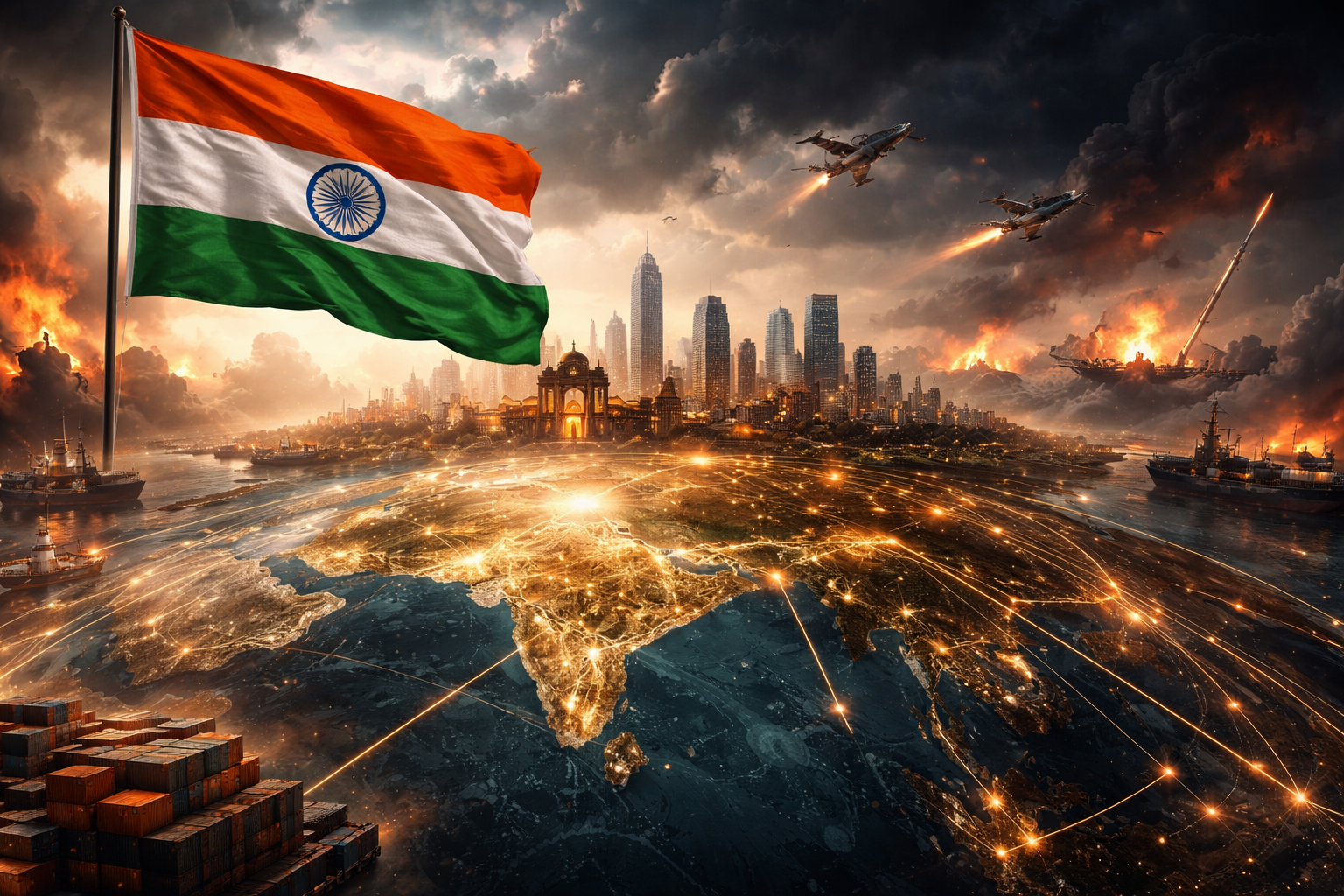
India is rising globally in economy, technology, and influence. However, alongside this growth exists a parallel layer of illusion:
1. Economic Reality vs Social Perception
- Growth indicators show progress, yet inequality and unemployment narratives dominate public discourse.
- The perception of crisis often spreads faster than verified data.
2. Media Narratives vs Ground Truth
- Selective reporting creates polarized realities.
- Different groups consume entirely different “versions” of the same event.
3. Youth and Digital Identity
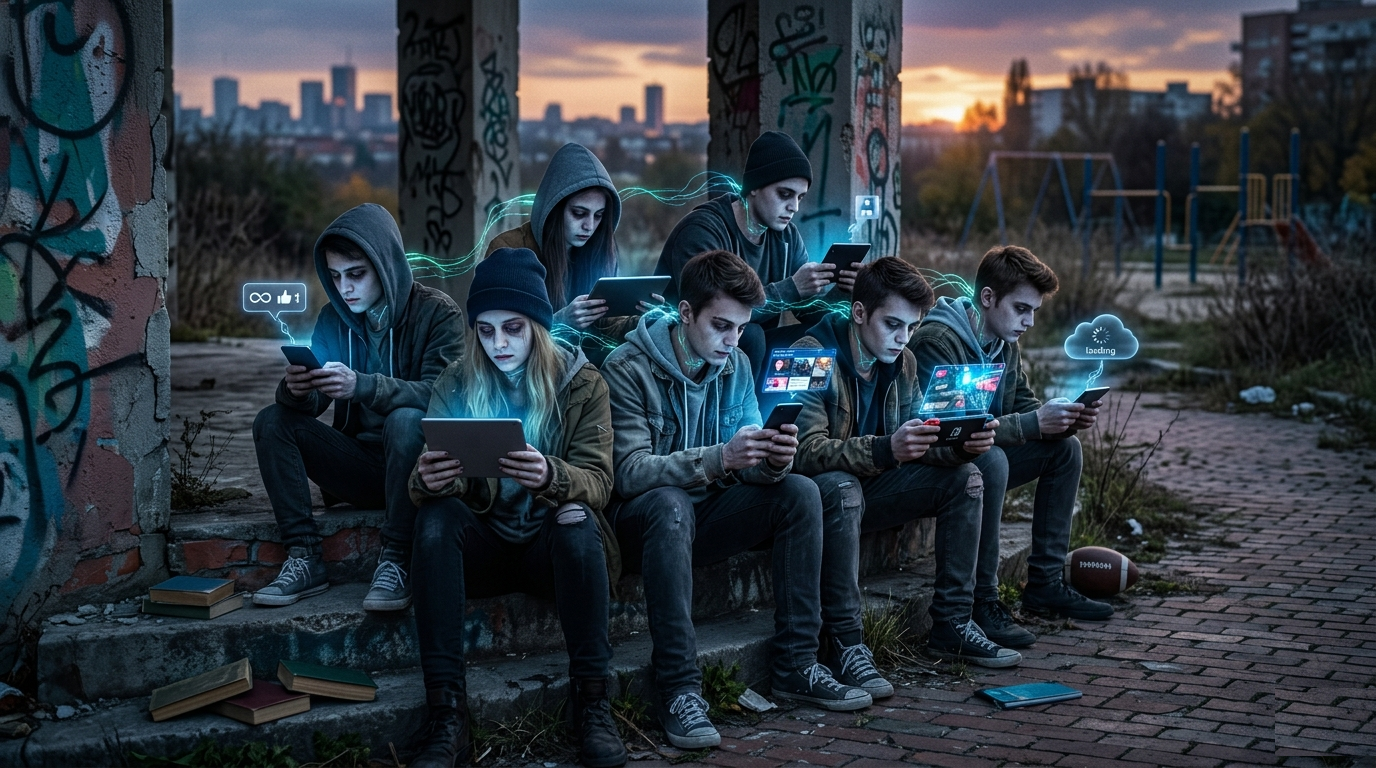
- Social media constructs aspirational illusions—success, lifestyle, and identity.
- This creates psychological pressure and detachment from reality.
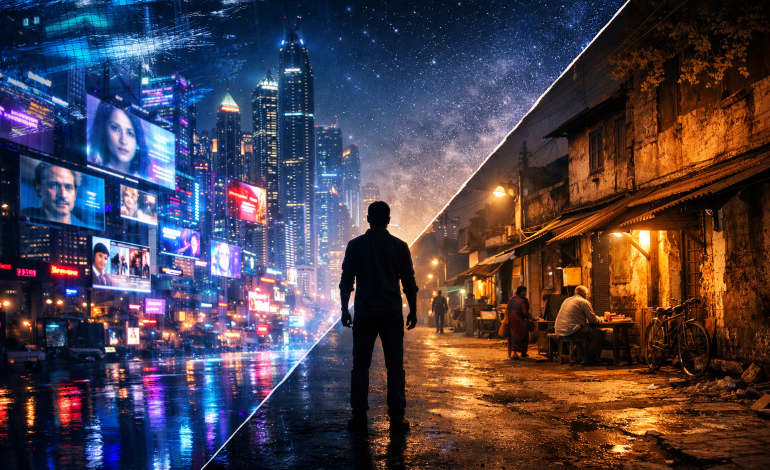
This duality creates a society where multiple realities coexist.
Global Context: Information as a Weapon
Modern wars are no longer fought only with weapons—they are fought with narratives.
- Psychological warfare now includes misinformation campaigns and perception management.
- Repetition of narratives makes them believable, even if false.
- Global tensions are often shaped by who controls the story, not just the facts.
This is known as information warfare—a silent but powerful conflict shaping public opinion worldwide.
Sociological Insight: Reality is Socially Constructed
Sociology suggests that reality itself is not fixed—it is constructed collectively.
- People interpret the world based on beliefs, culture, and experience.
- Digital communities reinforce shared illusions, turning them into accepted truths.
- Parasocial relationships (e.g., influencers, celebrities) blur fiction and reality, creating emotional connections that feel real.
This explains why two groups can look at the same event and see entirely different realities.
Psychological Traps: Why Humans Fall for Illusion
Human cognition is not designed for perfect truth—it is designed for survival and simplicity.
Key illusions shaping modern thinking:
- Illusion of Control – believing we influence outcomes we do not.
- Illusion of Explanatory Depth – thinking we understand complex issues deeply when we don’t.
- Focusing Illusion – overestimating the importance of one factor in life decisions.
These biases make humans vulnerable to manipulation, especially in high-stress or uncertain environments.
The Hidden War: Reality vs Illusion
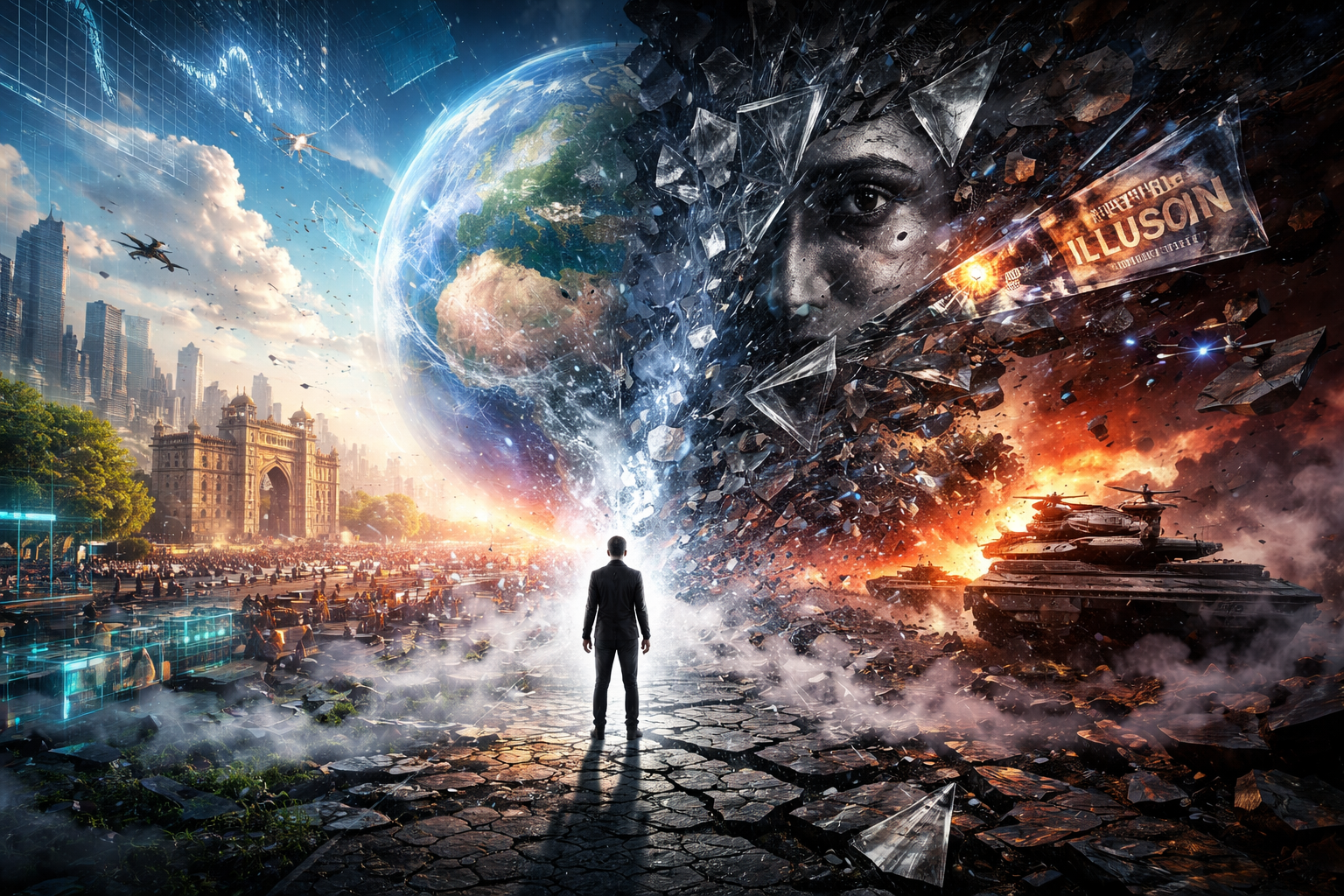
The real conflict today is not just geopolitical—it is cognitive.
- Truth competes with narratives.
- Facts compete with repetition.
- Reality competes with belief.
This creates a world where:
- Illusion can influence elections
- Perception can trigger conflict
- Belief can override evidence
This is the invisible war shaping the future.
India’s Role in the Global Truth Landscape
India stands at a critical intersection:
- A massive digital population
- Rapid technological growth
- Increasing geopolitical importance
This makes India both:
- A target of global narrative influence
- A creator of its own narratives
The challenge is not just growth—but clarity of truth within growth.
Conclusion: Reclaiming Reality
Reality is not disappearing—it is being overshadowed.
To navigate this world:
- Question repeated information
- Understand cognitive biases
- Seek multiple perspectives
- Value evidence over emotion
Because in the modern age, truth is no longer given—it must be discovered.