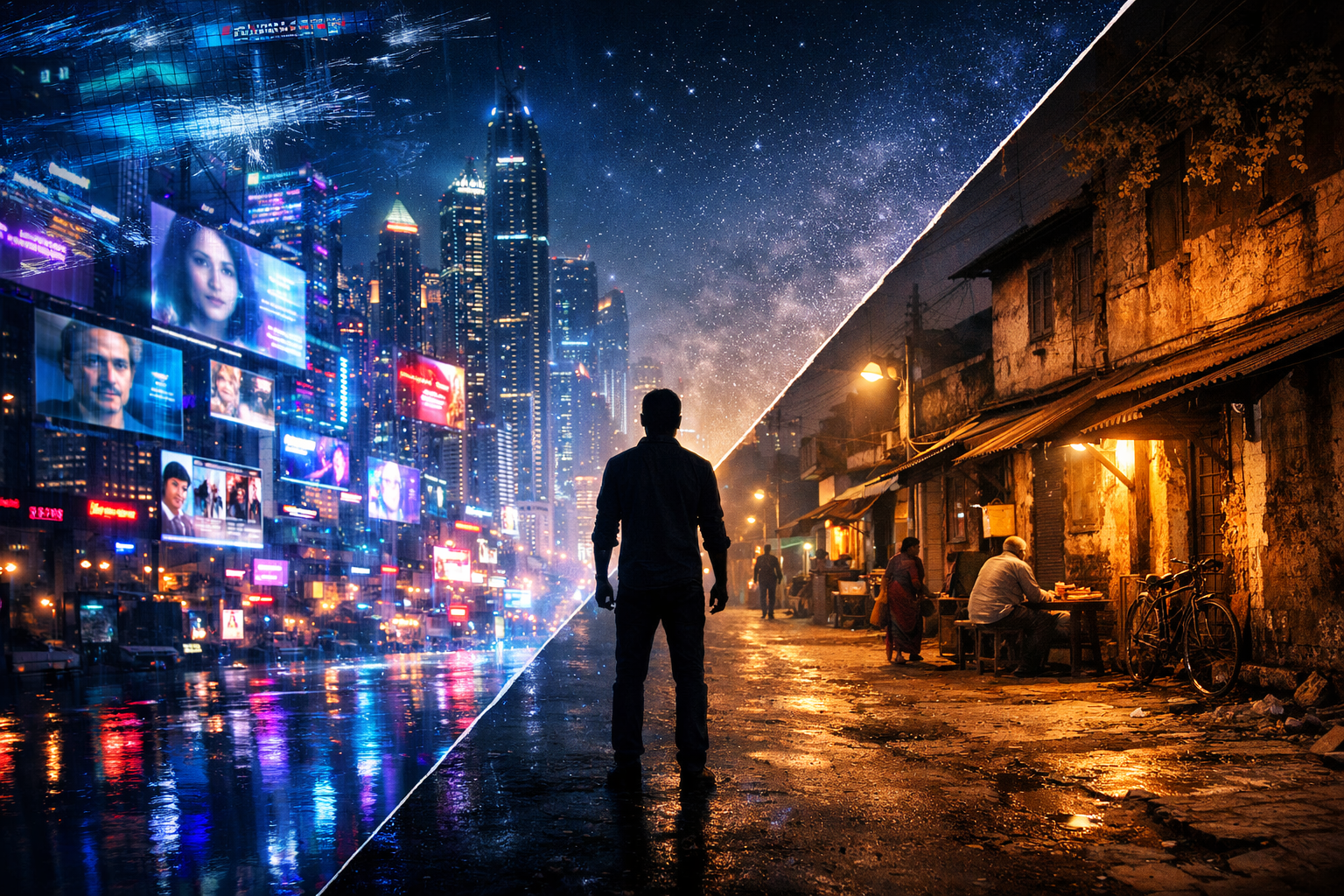
Reality vs Illusion: Decoding Truth in a World of Perception, Power, and Conflict
What we see is not always what is real. In a rapidly transforming India surrounded by global tensions, the line between reality and illusion is increasingly blurred. This article

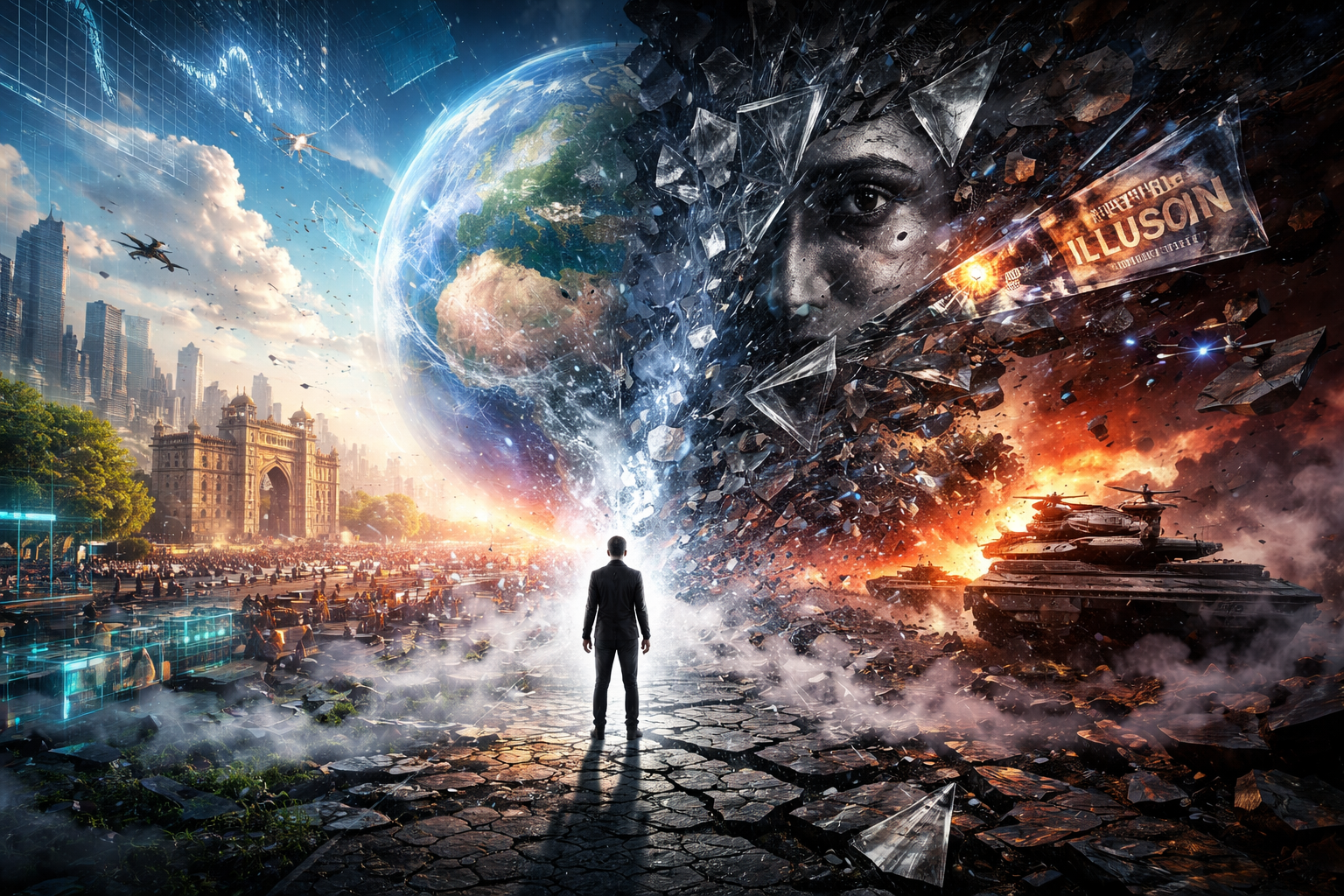
What we see is not always what is real. In a rapidly transforming India surrounded by global tensions, the line between reality and illusion is increasingly blurred. This article uncovers how perception, media narratives, psychological biases, and geopolitical strategies shape what we accept as truth—and what remains hidden beneath layers of illusion.
Reality vs Illusion: Truth in the Age of Perception
Introduction: The Fragile Nature of Truth
Reality is often assumed to be objective, fixed, and universal. Yet modern research and historical analysis reveal a different picture—reality is filtered through perception, shaped by context, and often manipulated by systems of power. Illusion, therefore, is not merely deception; it is a constructed layer over truth that influences human understanding.
Scientific and philosophical studies define illusions as deviations from accurate perception—where what we experience differs from what actually exists . This gap between perception and truth forms the foundation of how societies interpret reality.
The Science of Perception: Why Illusion Exists
Human perception is not a perfect reflection of reality. It is a cognitive process influenced by sensory inputs, memory, and environmental context. Research in neuroscience shows that perception is an active construction by the brain rather than a passive recording of reality .
Illusions reveal the limits and strengths of human cognition. They demonstrate that the brain prioritizes efficiency and survival over accuracy. For example:
- Visual illusions distort shapes and colors.
- Cognitive biases alter judgment and decision-making.
- Memory reconstructs events rather than replaying them.
This means that what individuals or societies believe to be “real” may already be a filtered version of truth.
Philosophical Dimensions: Reality Beyond Appearance
Philosophy has long debated the nature of reality. The distinction between “appearance” and “true existence” is central to both Eastern and Western thought.
Modern interpretations suggest that reality has two layers:
- Manifest Reality – what we perceive through senses
- Objective Reality – what exists independent of perception
Scholars argue that everyday experiences act like “interfaces,” hiding deeper truths much like icons on a computer screen represent complex systems .
In the Indian philosophical context, this aligns with the concept of Maya—the illusion that masks ultimate reality.
Media, Information, and Manufactured Illusions
In the 21st century, illusion is no longer limited to human perception—it is engineered. Media, digital platforms, and political narratives play a critical role in shaping collective reality.
Key mechanisms of illusion in modern systems:
- Selective Information Exposure: Highlighting certain facts while ignoring others
- Narrative Framing: Presenting events through biased storytelling
- Echo Chambers: Reinforcing existing beliefs through repeated content
- Misinformation & Disinformation: Blurring truth intentionally
Media does not always create false realities; instead, it reshapes perception of real events, making illusion indistinguishable from truth.
India’s Growing Landscape: Reality vs Perception
India today stands at a critical intersection of rapid growth, technological expansion, and global geopolitical pressures. While not in a literal state of war with the world, it faces multi-dimensional conflicts:
1. Information Warfare
Global narratives around India are often shaped externally through international media, think tanks, and digital platforms. Competing narratives create contrasting realities—one of growth and innovation, another of conflict and instability.
2. Economic Competition
India’s rise as a global economic power brings both opportunity and strategic resistance. Trade wars, supply chain shifts, and economic alliances contribute to a perception battle over India’s global role.
3. Internal Social Dynamics
Within India, diverse cultures, religions, and political ideologies create multiple “realities.” What is truth for one group may be perceived as illusion by another.
4. Technological Transformation
Artificial intelligence, deepfakes, and algorithm-driven content amplify illusions. Emerging research shows that even machines can develop “illusion-like” errors, highlighting vulnerabilities in both human and artificial perception .
Global Conflicts: The Illusion of Control
Across the world, geopolitical tensions create narratives of power, security, and dominance. However, these narratives often mask deeper realities:
- Conflicts are framed as ideological battles but driven by economic or strategic interests
- Public perception is managed through controlled information flows
- Nations project strength while hiding internal vulnerabilities
This creates a global environment where illusion becomes a strategic tool.
Psychological Impact: Living Between Truth and Illusion
The human mind constantly negotiates between reality and illusion. This has profound consequences:
- Cognitive Overload: Excess information blurs truth
- Belief Systems: People adopt simplified narratives to cope
- Emotional Manipulation: Fear, pride, and identity influence perception
Studies show that cultural and social contexts significantly affect how individuals interpret reality, even in cases like hallucinations or altered perception .
The Hidden Truth: Reality Is Layered
Reality is not a single, fixed entity. It is layered:
- Physical Reality – measurable and objective
- Perceived Reality – filtered through senses
- Constructed Reality – shaped by society and media
- Manipulated Reality – influenced by power structures
Understanding truth requires navigating all these layers critically.
Conclusion: Beyond Illusion
The battle between reality and illusion is not new—but it has intensified in the modern era. In India and across the world, truth is no longer just discovered; it is constructed, contested, and often controlled.
To move beyond illusion:
- Question narratives, not just accept them
- Seek multiple perspectives
- Distinguish evidence from opinion
- Understand the psychology behind perception
Reality does not disappear when ignored—but illusions can dominate when unchallenged.